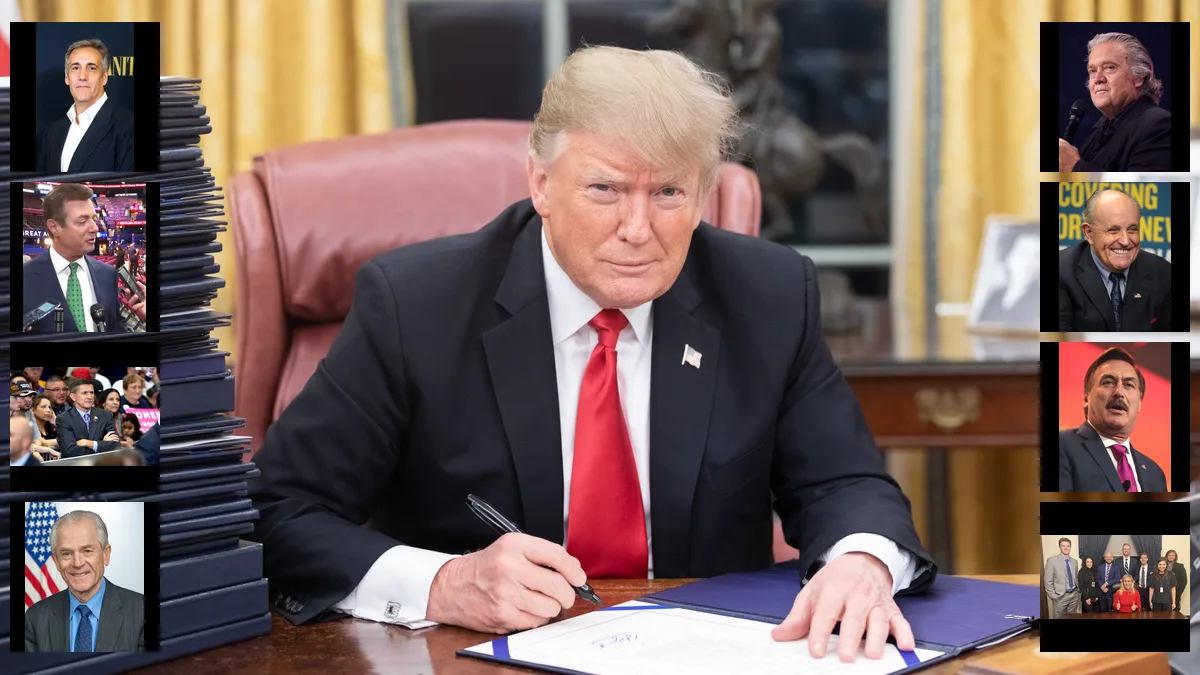
Subheadline: From Michael Cohen to Elon Musk and Marjorie Taylor Greene, a second Trump presidency is extending a long pattern: the people closest to him often pay the highest price.
3 Narratives News | December 10, 2025
Intro
Marjorie Taylor Greene says the moment it became real was not the death threats, or even the pipe bomb scare outside her Georgia home. It was scrolling her phone and seeing the words from the man she had defended for six years:
“Marjorie ‘Traitor’ Greene.”
The president revoked his endorsement, told the world she had “gone far left,” and promised to back a challenger in her own party. Within days, Greene announced she would resign from Congress, saying loyalty should be a two-way street and hinting that Trump’s public attacks had fueled hundreds of threats against her family.
On the same December morning, another longtime ally sounded tired. In a podcast interview, Elon Musk described his stint running the Department of Government Efficiency… The experimental DOGE unit that helped drive mass federal layoffs in Trump’s second term was only “somewhat successful.” He said he would not do it again and added a line that could double as an epitaph for his political adventure:
“Instead of doing DOGE, I would have worked on my companies,”
He told host Katie Miller. “They wouldn’t have been burning the cars.”
The same week Musk was trying to reassure shareholders after Tesla lost about 14 percent of its value in a single day amid an ugly public feud with Trump, Greene was packing up her office. Their stories are new, but the pattern around the man at the center is not.
Across two Trump presidencies, the people who orbit closest to him have often paid steep legal, financial, and political costs. Michael Cohen, Paul Manafort, Michael Flynn, Steve Bannon, Roger Stone, Peter Navarro, Allen Weisselberg, Rudy Giuliani, Mike Lindell, Mike Pence, and Fox News itself have all, in different ways, sustained damage through the courts, markets, or public trust.
By the end of Trump’s first term, researchers at Brookings calculated that 92 percent of his top decision-makers had left their roles, the highest churn rate in modern presidential history. Now, but halfway through his second term, the casualty list is growing again, this time with Elon Musk and Marjorie Taylor Greene as the most visible faces of second-term fallout.
This story does not ask you to see them as saints or as fools. They are powerful, often wealthy adults who made their own choices. What we can do is map the pattern and ask a simple question:
Why is the cost of proximity to Trump so high? Is this a feature of his leadership style, a reaction from his enemies, or just what happens when people play a very high-risk game?
As always at 3 Narratives News, we’ll tell this in at least two fully developed stories, each convinced it is right. You decide which one makes the most sense; you, our cherished readers, are the third narrative.
Context: The Damage Report Around Trump
Before we argue over causes, it helps to lay out the record. Think of it as a “Damage Report” infographic anchored around a single figure at the center: Donald J. Trump. Around him are different orbits of cost and legal, financial, reputational, or political.
1. Legal Fallout
Across Trump’s first term and its aftermath, at least ten close associates have been sentenced to prison or jail for crimes ranging from tax fraud to contempt of Congress. :contentReference[oaicite:6]{index=6} Here are some of the most prominent:
| Figure | Role in Trump World | Outcome |
|---|---|---|
| Michael Cohen | Personal lawyer and fixer | Convicted of tax and bank fraud, illegal foreign lobbying, and sentenced to more than 7 years in prison before receiving a presidential pardon in 2020. |
| Paul Manafort | 2016 campaign chairman | Convicted of tax and bank fraud, illegal foreign lobbying, and sentenced to more than 7 years in prison before receiving a presidential pardon in 2020. |
| Michael Flynn | First national security adviser | Pleaded guilty to lying to the FBI about contacts with Russia; later received a presidential pardon. |
| George Papadopoulos | Foreign-policy adviser | Pleaded guilty to lying to the FBI about his contacts; sentenced to 14 days in prison and later pardoned. |
| Steve Bannon | Chief strategist and populist architect | Convicted of contempt of Congress for defying the January 6 committee; sentenced to four months in prison and ordered to pay a fine. |
| Peter Navarro | Trade adviser | Also convicted of contempt of Congress, began serving a four-month sentence in 2024 after losing his appeals. |
| Roger Stone | Longtime political confidant | Convicted of lying to Congress and witness tampering; sentence later commuted and followed by a pardon. |
| Allen Weisselberg | Trump Organization CFO | Pleaded guilty to a 15-count tax-fraud scheme tied to Trump’s business, then later to perjury in Trump’s civil fraud case; served two stints in New York’s Rikers Island jail and was barred from holding financial control roles in New York companies. |
2. Financial Fallout
For some, the cost was counted in balance sheets.
- Rudy Giuliani, who became Trump’s most visible election lawyer, was ordered to pay two Georgia election workers $148 million for defamation after spreading false claims that they had manipulated ballots. He soon filed for bankruptcy. :contentReference[oaicite:15]{index=15}
- Mike Lindell, the MyPillow founder and major election-fraud promoter, watched retailers drop his products and admitted his company had lost around $100 million. He auctioned off equipment, was evicted from a Minnesota warehouse over unpaid rent, and saw his lawyers withdraw because, he said, he could no longer pay them. :contentReference[oaicite:16]{index=16}
- In 2025, a Colorado jury ordered Lindell to pay $2.3 million to former Dominion executive Eric Coomer for defamation. Months later, a federal judge in Minnesota ruled that Lindell had defamed Smartmatic, clearing the way for a jury to decide on potentially huge damages in that separate case. :contentReference[oaicite:17]{index=17}
3. Reputational and Corporate Fallout
- Fox News agreed in 2023 to pay $787.5 million to settle a defamation case brought by Dominion Voting Systems over election-fraud allegations. Another conservative outlet, Newsmax, later acknowledged in court that its own statements about Dominion were false and settled a claim with Smartmatic.
- Elon Musk, after becoming the face of the DOGE project and a Trump favourite, found his companies drawn into the political storm. Tesla became a central target of the “Tesla Takedown” movement, which urged consumers to dump their cars and shares in protest of Musk’s political role. Activists staged protests at dealerships while reports of vandalized Teslas and damaged charging stations spread.
- Wall Street took notice. On June 5, 2025, Tesla stock fell more than 14 percent in a single trading day as a public feud between Musk and Trump played out online, wiping roughly $150 billion off the company’s value.
4. Political and Personal Fallout
- Jeff Sessions, Trump’s first attorney general, was hounded from office after recusing himself from the Russia investigation, then publicly mocked when he tried to return to the Senate.
- John Kelly, Rex Tillerson, James Mattis, and other senior officials left in a blur of memoirs and anonymous quotes about chaos behind the scenes.
- Marjorie Taylor Greene may be the clearest second-term example. Once one of Trump’s fiercest allies in Congress, she broke with him over Israel, Iran, health-care subsidies, and the handling of the Jeffrey Epstein files. Trump responded by calling her “wacky” and a “traitor” and withdrawing his endorsement. After that, Greene says, threats against her and her son surged. She has now announced her resignation from Congress, telling one interviewer that she had given Trump her loyalty for free and expected at least a little in return.
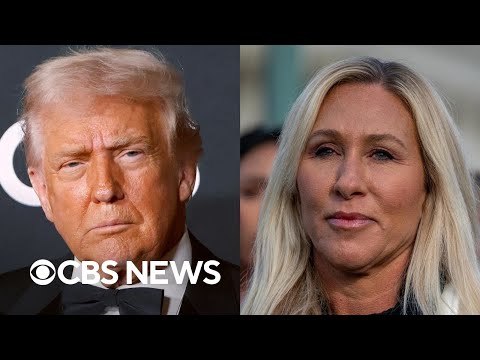
Seen from a distance, the pattern is stark: proximity to Trump often comes with unusually high legal, financial, and reputational volatility. The question is why. That is where our three narratives diverge.
For more background on how we approach complex power struggles, you can see our earlier investigations, from “Trump, China and Venezuela: Four Reasons This Standoff Matters” to our corruption deep-dive “Ukraine’s War Within: Ukrainian Journalist Heroes and the ‘Midas’ Scandal.”
Narrative 1: The Disposable Asset Theory
From the perspective of Trump’s critics and those who see his leadership style as relentlessly transactional.
In this telling, nothing about the casualty list is accidental. The turmoil is not a side-effect of disruptive politics; it is how the system is designed to work. At the center is a leader who demands unilateral loyalty and treats people as temporary shields for his own interests.
The pattern feels familiar. Michael Cohen takes the risk of arranging hush-money payments and ends up in prison. Paul Manafort helps deliver the convention, then becomes the face of financial corruption. Michael Flynn opens back channels, then becomes the one who lied to the FBI. Steve Bannon helps build the populist narrative, then finds himself in a courtroom for defying a congressional subpoena. Allen Weisselberg keeps the company books and spends months at Rikers Island. The bill, critics say, never lands on Trump’s own desk.
In this view, the core mechanism is simple: Trump actively pushes his aides, lawyers and allies into risky behavior that benefits him, but he keeps enough distance and ambiguity to preserve his own deniability. When things go well, he praises them as “fighters” and “warriors.” When they become legal or political liabilities, he calls them “weak,” “dumb,” or “traitors” and insists they acted alone.
Greene’s arc fits neatly into this storyline. For years, she echoed Trump on everything from election denial to culture-war fights, absorbing criticism that might otherwise have hit him. When she finally broke with him on Gaza, Iran, and the release of the Epstein files, he did not argue with her on the merits. He rebranded her as “Marjorie ‘Traitor’ Greene” and told his followers she had gone soft.
Elon Musk’s experience inside DOGE becomes another cautionary tale. A billionaire CEO steps into government as a kind of volunteer executioner of red tape, and for a while everyone at the top seems pleased. DOGE helps drive layoffs and buyouts at dozens of agencies while being marketed as a crusade against waste. But when courts begin blocking cuts, protests swell, Tesla’s share price plunges, and some customers literally burn his cars in demonstrations, the president still has the bully pulpit and a plane. It is Musk who has to go back to shareholders and explain why his stock lost over $150 billion in value during a public feud.
Critics connect these dots and see a system built for one person’s self-preservation. Loyalty flows inward, risk flows outward. People around Trump are asked to trade their reputations, and sometimes their freedom, for a place in his orbit. When that trade stops serving him, the relationship ends instantly and noisily.
That is why the list of casualties keeps growing. It is not that everyone around Trump is innocent; many chose their path with open eyes. But the critics’ conclusion is blunt: in this orbit, people are treated as disposable assets. The “victimhood” is not that they were naive citizens; it is that they misjudged how far a leader built on grievance and dominance would go to protect himself first.
In this narrative, the warning for a potential third wave of appointees is straightforward: if you step into this inner circle, do it knowing that the loyalty you offer may not be returned when the heat comes.
Narrative 2: The Frontline Martyr Theory
From the perspective of Trump loyalists, who see a weaponized system targeting anyone who stands beside him.
In the second story, the same list of names looks very different. Instead of a trail of disposable tools, it is a roll call of people who took the arrows aimed at Trump and paid the price for touching what his supporters see as the central taboo of American politics: challenging the establishment.
Start with the basic feeling: every time someone effectively advances Trump’s agenda, the system comes for them. Prosecutors indict. Media investigations multiply. Professional boards revoke licenses. Behind that pattern, in this view, is a loose alliance of institutions, federal agencies, big media, blue-state courts, and even corporate boards that see Trumpism as an existential threat and will punish anyone who helps him wield power.
From this perspective, Michael Flynn was not a loose-talking general who misled the FBI; he was a decorated officer whose efforts to change the foreign-policy establishment brought swift retaliation. Paul Manafort was not just a consultant with shady clients; he was a warning shot to any operative who might try to build another nationalist coalition. When allies like Flynn or Manafort received pardons, supporters saw not cronyism but battlefield triage.
Legal cases like those against Navarro and Bannon become part of the same pattern. In this narrative, Congress did not suddenly fall in love with defending its subpoena power; it used contempt charges to send a message to anyone who might help Trump resist or reinterpret its investigations. And when Allen Weisselberg, an elderly CFO, was repeatedly marched to Rikers Island over tax schemes and perjury, loyalists saw a system willing to squeeze a bookkeeper to get at a president it could not convict.
Even the corporate cases fit. Dominion and Smartmatic, in this view, are less about individual defamatory statements and more about deterring future challenges to how elections are run. When Fox pays $787.5 million, when Newsmax apologizes, when Mike Lindell faces multi-front lawsuits and mounting judgments, supporters see something larger than defamation law at work. They see a shot across the bow of every network, CEO, or ordinary citizen tempted to allege fraud the next time the vote is close.
In that worldview, Elon Musk’s DOGE experience is not proof that Trump burns his allies; it is evidence that the system will punish anyone who helps him govern effectively. DOGE tries to slash bureaucracy, and who sues first? Federal unions, public-sector advocacy groups, and blue-state attorneys general. Judges block layoffs at 20 agencies and pause access to data. Tesla becomes a protest target not because Trump abandoned Musk, but because left-leaning activists know the fastest way to hurt the president is to damage the fortune of his most prominent business ally.
Greene’s fall from grace is harder for this camp to process, but even there, many do not blame Trump. Instead, they see a movement struggling with internal discipline. When Greene publicly criticized Trump on Israel and domestic policy, they argue, she gave ammunition to enemies and undercut unity. Calling her a “traitor” may be harsh, but for loyalists who think the country is facing an existential fight, the word fits. If she then receives threats, they are tragic and unacceptable, but they do not negate the larger fact that “going soft” on key issues has consequences in a movement built on strength.
In this narrative, the orbit around Trump is dangerous not because he is careless with people but because the system is relentless with anyone who stands too close. Lawyers, advisers, and CEOs become frontline martyrs in a campaign against what they see as a captured state. The prison sentences, the fines, even the lost fortunes are read as proof that the movement matters enough to scare powerful institutions.
The conclusion here is not “stay away from Trump.” It is the opposite: if you believe the system is rigged, then some level of personal sacrifice is inevitable. The only question is whether you are willing to pay it.
The Icarus / Volatility Theory
From the perspective of those who see insurgent politics itself as a high-risk, high-reward business model.
The third story zooms out. It does not start with Trump’s character or with a shadowy establishment. It starts with a basic observation about how disruptive politics works in the modern media economy.
High-intensity, norm-breaking movements attract high-risk personalities. They also operate in an environment of 24-hour media, social networks, and financial markets hypersensitive to controversy that amplifies the consequences of every misstep. The result is volatility. Trump’s orbit looks extreme partly because he is extreme, but also because the entire political and information system around him is.
In this view, the 92 percent turnover in his first term is not just a reflection of one man’s management style, but the strain of trying to run a government as a rolling populist campaign. Senior officials churn because the job is structurally impossible: they are asked to satisfy a base that expects disruption, a bureaucracy that expects rules, and a president who lives in the slipstream of media cycles.
Look at Elon Musk and Marjorie Taylor Greene through that lens. Both were volatility magnets long before Trump came along. Musk built his career on audacious bets that spooked investors and thrilled fans in equal measure. Greene entered politics as an unapologetically confrontational figure, comfortable with conflict and controversy. They did not become high-risk players because of Trump; they were drawn to him because they were already wired that way.
Once inside the orbit, the feedback loops intensify. Musk takes over Twitter, rebrands it as X, weighs in on culture wars, then agrees to run DOGE, a temporary agency designed from the start as a lightning rod for every fight over the size of government. Courts, unions, and watchdog groups push back, sometimes successfully. Protest movements like Tesla Takedown spring up. Share prices swing wildly. That could have happened under any president who invited a billionaire to restructure federal agencies in public.
Greene’s path has a similar shape. A backbench member of Congress becomes a national figure less through committee work and more through viral confrontations, social-media fights, and high-stakes culture-war positioning. Over time, she drifts far enough from the leader of her movement that a break becomes inevitable. In a calmer political era, that might mean a quiet primary challenge or a slow fade from relevance. In 2025, with online outrage machines running at full speed, it means a Truth Social broadside, a wave of threats, and an exit from Congress under floodlights.
In this narrative, the legal cases are part of the same volatility rather than proof of uniquely good or uniquely evil intent. Cohen, Manafort, Flynn, Weisselberg, Giuliani, and Lindell all pushed into legally sensitive territory with hush-money arrangements, foreign consulting, aggressive tax engineering, election-fraud accusations in a system that was already racing to catch up with the consequences of digital disinformation and globalized money flows. Some crossed clear lines and were convicted. Others skirted edges that regulators and judges are still defining in real time.
None of that absolves Trump of responsibility, but it also does not make him uniquely powerful. The Icarus Theory says something simpler: if you build a political project around disruption, norm-breaking, and constant attention, you will attract people who live for that adrenaline and are willing to risk collapse. Many of them would have found another volcano to dance around if Trump had never run.
In other words, the casualties of his orbit are not just the product of one man’s design or one system’s revenge. They are the expected losses of a volatile model in a volatile era.
Who Will Stand Close Next Time?
Behind each of these narratives is a quieter question that doesn’t fit easily into a partisan frame.
For the families of these figures, Cohen’s children, Weisselberg’s grandchildren, Lindell’s employees, Greene’s son, watching threats pile up in his mother’s inbox, the arguments over who is to blame do not change the lived cost. A prison sentence is still a prison sentence. A wiped-out business is still a lost job. A resignation is still a life rerouted.
There is also a structural question for the country. A presidency, any presidency, needs people willing to accept responsibility, sign their names to memos, and implement decisions. That was hard enough in Trump’s first term, when turnover set records. It is harder now, with a much longer record of associates stepping out of the West Wing and into subpoenas, threat assessments, or shareholder revolts.
If this pattern continues, who staffs the next wave? Will it be seasoned professionals who know the risks and decide to accept them anyway? A thinner bench of true believers with less expertise and fewer fallbacks? Or a new class of ambitious risk-takers who see proximity to Trump as a lottery ticket worth the odds?
This is where our three stories converge. Whether you see these people as disposable assets, frontline martyrs, or Icarus figures, the system still has to function. Someone has to run agencies, negotiate with foreign leaders, manage crises, and sign their name under policies that will outlast any administration.
The orbit around Trump is not empty. It keeps pulling people in. The real silent story is what happens to American governance when the cost of standing too close keeps climbing.
Key Takeaways
- Trump’s inner circle has seen unusually high legal, financial, and political fallout, from criminal convictions and huge civil judgments to wiped-out careers and resignations.
- Critics see a “Disposable Asset” pattern in which Trump demands loyalty but abandons allies the moment they become liabilities, leaving them to absorb legal and reputational damage.
- Loyalists frame the same people as martyrs of “lawfare”, arguing that a weaponized justice system and hostile media make examples of anyone effective at advancing Trump’s agenda.
- A systemic view emphasizes volatility over villainy, seeing Trump’s orbit as one extreme example of a broader high-risk political model that attracts risk-takers and produces spectacular failures.
- The open question is practical, not just moral: in a second Trump administration where the costs of proximity are so visible, who will still be willing to step into the inner circle?
Questions This Article Answers
1. Who are the most prominent legal casualties in Trump’s orbit?
The article highlights figures such as Michael Cohen, Paul Manafort, Michael Flynn, Steve Bannon, Roger Stone, Peter Navarro and Allen Weisselberg, all of whom faced criminal convictions or jail time after serving in, or closely alongside, Trump’s first administration.
2. How did Elon Musk become part of the second-term fallout?
Musk led the Department of Government Efficiency (DOGE), which drove aggressive federal layoffs and spending cuts. The role triggered lawsuits, protests, a coordinated boycott movement against Tesla, vandalism of vehicles and charging stations, and sharp swings in Tesla’s share price. Musk now says DOGE was only “somewhat successful” and that he would not do it again.
3. Why is Marjorie Taylor Greene now counted among Trump’s political casualties?
Greene, once a staunch ally, broke with Trump over Israel, Iran, and domestic policy. Trump responded by calling her a traitor, withdrawing his endorsement and publicly ridiculing her. Greene says threats against her and her son spiked afterward, and she has announced her resignation from Congress.
4. Is Trump uniquely harsh on his inner circle, or is this just what happens in disruptive politics?
The three narratives suggest different answers: one says Trump’s personal style makes casualties inevitable, another says a weaponized system punishes his allies, and the third argues that any high-risk populist project in today’s media and legal environment would produce similar volatility.
5. What does this pattern mean for staffing a future Trump administration?
If the legal and reputational costs of proximity continue to rise, it may become harder to attract experienced officials. Future inner circles could skew toward loyalists with fewer alternatives, or toward new risk-takers willing to accept the stakes in exchange for influence.
You Decide: Why Is the Trump Orbit So Costly?
We’ve laid out the history and the arguments. Now we hand the final narrative to you. If you were designing our “Damage Report” infographic, how would you label the cause at the center?
- [ ] It’s the Leader (Transactional): People are treated as tools and discarded when they become liabilities.
- [ ] It’s the Enemies (Persecution): A weaponized system punishes anyone effective who stands by Trump.
- [ ] It’s the Game (High Risk): Insurgent, norm-breaking politics is volatile by nature, no matter who runs it.


