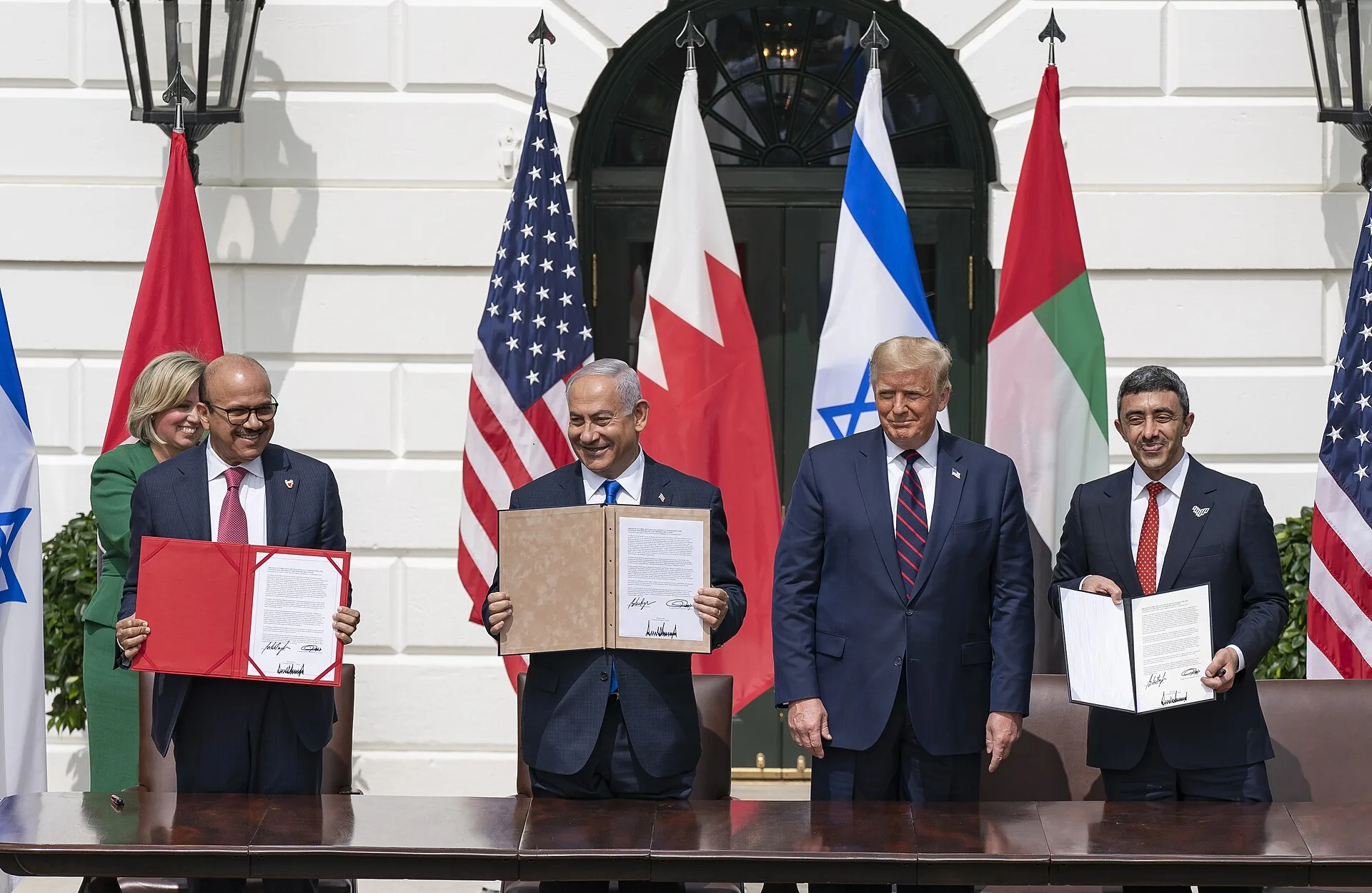
Trump says it starts with Gaza, then expands. Canada’s Mark Carney is invited into a U.S.-led board for the territory. Supporters call it bold; critics call it colonial. The real story is legitimacy, money, and who secures a seat before rebuilding becomes a business.
By Carlos Taylhardat, Editor-in-Chief |
It begins the way new power arrangements often do now: not with a treaty or a parliamentary vote, but with an invitation letter and a list of names.
According to Reuters, leaders in several countries have received an invitation to join a U.S.-led “Board of Peace,” a body the Trump White House says will oversee Gaza’s transitional governance and reconstruction under a fragile ceasefire. Trump told Reuters the project will “start with Gaza” and handle other wars “as they arise.”
Correction: If you heard a version of this story claiming “Mark Carney, former Prime Minister of England,” here is the clean fact: the former U.K. Prime Minister involved is Tony Blair. Mark Carney is currently Canada’s Prime Minister, and reporting confirms Canada has been invited to join the initiative.
The Current Roster:
- • Donald Trump (Chair)
- • Tony Blair
- • Jared Kushner
- • Marco Rubio
- • Steve Witkoff
- • Ajay Banga (World Bank)
What Trump Announced: The Infrastructure of Peace
The White House plan involves a Palestinian technocratic administration overseen by an international board. However, a separate “Gaza Executive Board” including Turkish Foreign Minister Hakan Fidan has already met with Israeli objections, with Jerusalem citing a lack of coordination.
The Mark Carney Factor
If Prime Minister Carney joins, Canada enters the governance architecture of Gaza. Carney’s appeal is functional: he is fluent in finance and institutional credibility. If the goal is to make Gaza look like an investment opportunity rather than a security zone, Carney fits the mechanics—but his participation will be read as a full alignment with a U.S. model for the territory’s future.
Narrative 1: Peace Through Strength
In this worldview, the old peace process failed because it managed conflict instead of ending it. Trump is building a mechanism that coordinates security, aid, and investment at scale. Supporters argue that the U.S. has the leverage to force follow-through where multilateralism has failed. This is emergency governance designed to deliver results quickly.
Narrative 2: The Neo-Trusteeship
This worldview sees a “Board of Peace” as a trusteeship with better branding. Critics argue that legitimacy cannot be imported, and a board chaired by Trump with no Palestinian representation looks like a reconstruction regime rather than a society designed to be free. For Canada, this is a trap: joining risks co-signing a model that may be rejected by the very people it aims to govern.
The 3N Diplomatic Lens
Institutions are a language. A “board” signals who sets the timeline and who controls the money. In Latin America and the Middle East, the first battle after a regime falls or a war stops is the “recognition vacuum.” Middle powers like Canada are often pulled in to certify the arrangement as respectable.
Ottawa’s real risk is not what it does in Gaza; it is what its name is used for in Washington when the plan hits its first legitimacy crisis.
Sources:
Reuters |
The Washington Post |
U.N. Resolution S/RES/2803


