
Related reading: 3 Narratives News | About the Editor | Corrections & Editorial Standards
3 Narratives News | March 30, 2026
By Carlos Taylhardat
There are moments in war when a country’s future seems to pass not through institutions, but through one human being. Iran may be in one of those moments now. Mojtaba Khamenei, long known more as a whispered presence than a public statesman, has emerged as the Islamic Republic’s new supreme leader after the unprecedented airstrike that killed his father, Ali Khamenei and other members of his immediate family, including his wife, daughter, mother and granddaughter.
Now, wounded, bereaved, and largely unseen, he is being asked to decide whether Iran will bleed on or bargain.
U.S. President Donald Trump, sensing a possible opening amid the regime’s staggering losses, said Monday he is dealing with a
“more reasonable regime,”
framing of the decapitation strikes as tantamount to regime change. But the man at the center of that possibility has barely been seen in public, communicating only through written statements, and remains defined more by myth than by his own voice.
The February 28 Decapitation Strike
To understand the psychology of Iran’s new leadership, one must understand the violence of its succession. On the morning of February 28, the United States and Israel launched a coordinated offensive, dubbed Operation Epic Fury by Washington and Roaring Lion by Jerusalem. The campaign opened with a daylight decapitation strike aimed directly at the heart of the Iranian establishment.
Utilizing CIA targeting intelligence, Israeli jets dropped 30 bombs, alongside Blue Sparrow air-launched ballistic missiles, obliterating Ali Khamenei’s secure residential and office compound in Tehran.
The human toll within the compound was absolute. Alongside the 86-year-old Supreme Leader, the bombardment killed his wife, Mansour (who succumbed to injuries days later); his daughter, Boshra Khamenei; his daughter-in-law, Zahra Haddad-Adel; his son-in-law, Mesbah Bagheri Kani; and a 14-month-old grandchild. Mojtaba Khamenei survived the blast that levelled his family’s home, but was reportedly pulled from the rubble with severe injuries to his arm and legs.
Reader Roadmap
This story turns on two competing interpretations of Mojtaba Khamenei’s current posture:
- Narrative 1: He is the wounded custodian of a shattered state, a veteran and cleric who will negotiate only from a position of dignity, endurance, and survival.
- Narrative 2: He is the ultimate insider, a hard-line gatekeeper shaped by the Revolutionary Guards, now too invested in the system to truly remake it.
- The Third Narrative: The overlooked question of how profound grief and trauma change a leader. Does it soften him into pragmatism, or make compromise feel like an unforgivable betrayal?
Context: Who is Mojtaba Khamenei, Really?
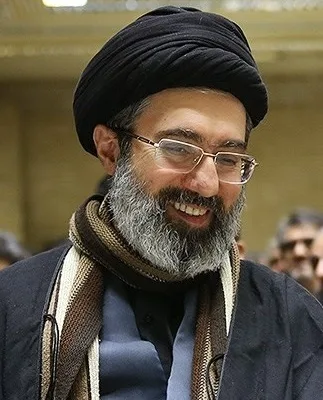
For years, Mojtaba Hosseini Khamenei (born 8 September 1969) was treated by Iran watchers as the son in the back room. Western intelligence and media have long described him as a hard-liner with deep, enduring ties to the Islamic Revolutionary Guard Corps (IRGC). He is a cleric who never held a formal government office but exercised immense influence as the ultimate gatekeeper to his father. He historically opposed reformists who favored engagement with the West and was widely believed to have orchestrated the brutal suppression following the 2009 elections.
At the same time, the official Persian-language portrait of him is strikingly different. State-linked outlets like Fars and Mehr describe a man raised in a household built on “asceticism, learning, and struggle.” They emphasize his service at the Iran-Iraq war front at age 17—fighting under the pseudonym “Hosseini” so fellow soldiers wouldn’t know he was the president’s son. They present him as a disciplined, austere seminary scholar.
There is also a revealing contradiction around his clerical stature. Before the strike, he was widely referred to as a Hojjatoleslam, a mid-level clerical rank, prompting critics to question his religious credentials for supreme leadership. Overnight, state outlets elevated him to Ayatollah. This tension is not a minor footnote; it gets to the heart of whether his authority is currently rooted in theology, raw power, or national trauma.
The Diplomatic Implication: By officially broadcasting Mojtaba Khamenei as a janbaz of the “Ramadan War” following the February 28 strike, the regime is performing a profound act of political alchemy. They are instantly bridging his modern injuries with the sacred, blood-soaked legacy of the 1980s. A politician can be pressured to compromise; a janbaz cannot. By bestowing this title upon him, the state is signalling to the world and to its own people that Mojtaba’s physical wounds have granted him an untouchable moral authority.
Narrative 1: The Wounded Guardian
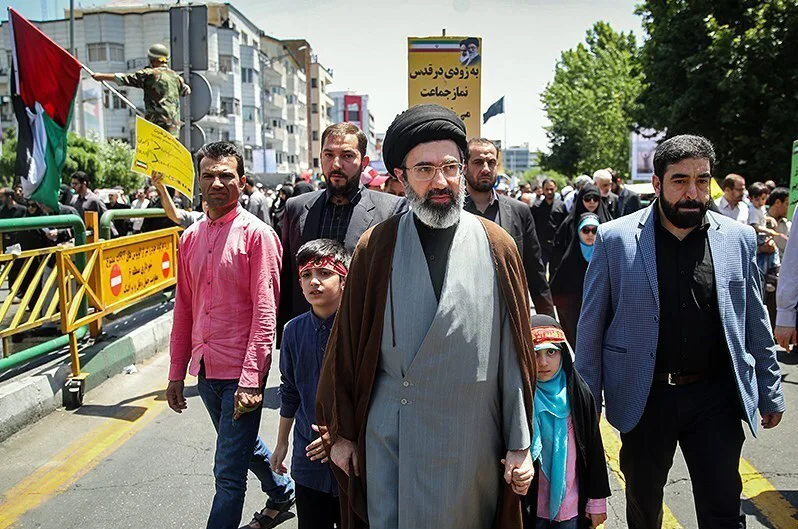
From the regime’s own perspective, Mojtaba’s biography is almost too perfect for wartime mythmaking. He is not presented as a prince inheriting comfort, but as a boy of the revolution, a battlefield veteran, and now a reluctant inheritor of martyrs’ blood. Iranian state television has explicitly referred to him as a janbaz – a wounded veteran of what they are calling the
“Ramadan War.”
In this worldview, any negotiation with Washington is not a surrender. It is the act of a wounded steward trying to save Iran without humiliating it. Leaders forged in martyrdom politics usually do not trade in easy concessions; they bargain in symbols, sequencing, and honor.
If Mojtaba enters any real negotiation, this narrative suggests he will insist on appearing unbroken, even if his military is privately exhausted. While Trump may claim a “more reasonable” tone from intermediaries, Tehran may simply be consolidating power from a consciousness that survival now requires a deal that can be sold at home as defiance, not capitulation. But nobody knows, and I don’t think that even the Ayatollah himself knows yet what the Janbaz leader will eventually do.
Narrative 2: The Hard Man of the Back Room
The opposite reading is considerably darker. This narrative argues that the mystery around Mojtaba is not the mystery of a philosopher, but of a ruthless operator. He is deeply embedded in the system’s coercive core.
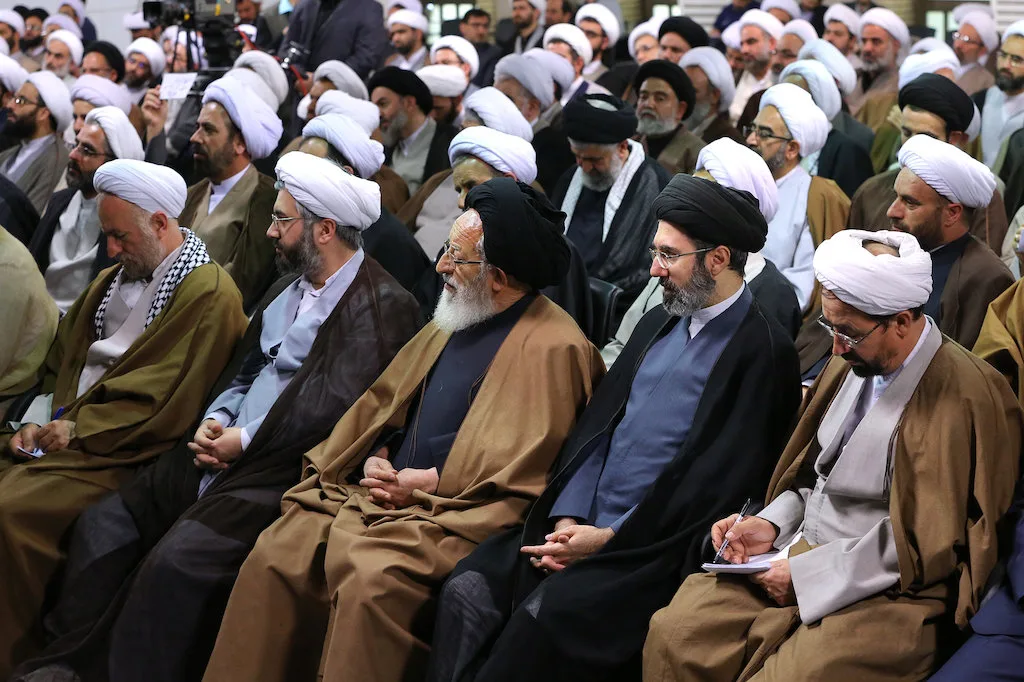
From that angle, his grief does not make him more flexible; it makes him far more dangerous. A man who has lost his parents, sister, wife, and a grandchild to American and Israeli bombs and who owes his rapid ascension to the IRGC may feel intense pressure to prove he is harder than his father. Some observers believe he holds views even more extreme than Ali Khamenei.
In the meantime, Iran is cracking down internally, fearing civilian uprisings in the wake of the strikes. A leader in that setting may allow intermediaries to talk peace outside while he tightens the noose inside. That is not moderation; it is regime preservation by other means.
3N Diplomatic Lens
Diplomacy often misreads wounded leaders. Outsiders naturally assume that pain creates pragmatism. Sometimes, however, it creates a need for revenge of the worst kind, stemming from an emotional scar that changed the entire outlook. If Churchill said
“We shall never surrender”
at a time when most thought it was an impossibility for Britain to overcome the superior force of the battle-hardened Germans bombing London. What will a leader who lost all of his loved ones in one strike and nearly died, what will he do? Negotiate peace now and construct a revenge?
More often, it creates a split personality in statecraft: one channel for public rage, one for private bargaining. Right now, Washington may be dealing less with Mojtaba directly and more with a fractured leadership speaking through figures like Parliament Speaker Mohammad Bagher Ghalibaf. But make no mistake: Mojtaba’s silence does not mean irrelevance. He is likely the one deciding what others are permitted to offer.
Narrative 3: The Silent Story of Grief and Statecraft
History suggests three models for how leaders negotiate while under fire.
Winston Churchill is the first. In May 1940, with Britain reeling, Churchill publicly promised endurance rather than negotiation, famously declaring Britain would “never surrender.” His lesson was that sometimes, survival itself requires completely refusing the psychology of defeat.
Golda Meir offers a second model. During the Yom Kippur War, she governed with one eye on the battlefield and the other on the bargaining position Israel would hold when the guns went silent. She fought for time and a stronger military map before accepting a ceasefire, believing premature diplomacy would lock in humiliation. Her lesson: negotiation is most serious when leaders are trying to improve terms under fire, not escape the fire at any price.
Volodymyr Zelensky offers a third. In March 2022, under heavy Russian bombardment, he pursued a leaders’ meeting for peace but made clear Ukraine would not negotiate through submission. The lesson is simple: leaders under attack often negotiate most intensely when they believe they must preserve both the state and the nation’s self-respect simultaneously.
If Mojtaba Khamenei is negotiating at all, history suggests he will do so in this register. Not as a reconciler in the Western sense, and not as a broken man seeking relief. He will likely bargain as someone who believes he must avenge his dead family politically by ensuring Iran is not seen kneeling. This can still produce a deal, but it will be a narrow, cold, transactional deal—one that saves face first, and saves lives second.
Perhaps that is why he remains in the shadows. Mojtaba Khamenei is currently half-biography and half-projection. The Iranian state presents a simple-living scholar-soldier. Critics see a hidden hard-liner. Trump sees an opening. The truth is he is likely all three at once: a bereaved son, a system man, and the damaged face of a state trying to decide if ending a war is weakness or the only way left to win.
Key Takeaways
- A Devastating Strike: The Feb 28 US-Israeli daylight strike on Tehran killed Supreme Leader Ali Khamenei, his wife, daughter, daughter-in-law, son-in-law, and a grandchild.
- A Wounded Heir: Mojtaba Khamenei survived the blast but suffered severe injuries to his legs and arm, taking over as the new Supreme Leader while hidden from public view.
- Competing Narratives: The Iranian state portrays him as a humble, battle-tested scholar (a janbaz), while Western intelligence views him as a secretive, hard-line operator tied to the IRGC.
- The Psychology of Negotiation: History shows that leaders under direct fire (like Churchill, Meir, and Zelensky) rarely negotiate from softness; they fight to preserve national dignity before accepting peace.
Questions This Article Answers
Who is Mojtaba Khamenei?
He is the son of the late Ali Khamenei, a former behind-the-scenes gatekeeper with deep ties to the Revolutionary Guards, who has now been elevated to Supreme Leader following his father’s assassination.
What happened during the February 28 strike?
In a coordinated US-Israeli operation, 30 bombs and ballistic missiles destroyed the Supreme Leader’s compound, killing Ali Khamenei and five close family members, while severely wounding Mojtaba.
Is Mojtaba Khamenei personally negotiating with the United States?
It is unlikely he is speaking directly with Washington. Negotiations appear to be moving through intermediaries like Parliament Speaker Mohammad Bagher Ghalibaf, though Mojtaba likely sets the parameters of what can be offered.
Could grief make Iran’s new leader more pragmatic?
While outsiders often hope trauma leads to pragmatism, history and his deep IRGC ties suggest Mojtaba’s grief may make him more uncompromising, viewing concessions as a betrayal of his martyred family.
The Lexicon of Sacrifice: What is a Janbaz?
To understand the political weight of Mojtaba Khamenei’s new framing, one must understand the specific vocabulary of Iranian statehood. In Persian, the word janbaz (جانباز) translates literally to “one who plays with his soul” or “one who risks his life.”
Historically, the term carries a romantic, almost poetic connotation of absolute bravery and selflessness. However, in the modern Islamic Republic, the word has a highly formalized and sacred institutional definition. Following the brutal Iran-Iraq War (1980–1988)—a conflict Tehran refers to as the “Sacred Defense”—the state repurposed the term to designate the hundreds of thousands of Iranians who returned from the frontlines with severe physical trauma.
Today, there are an estimated 500,000 officially recognized janbazan in Iran. They represent the visible scars of the revolution: amputees, the blind, and over 100,000 survivors of Saddam Hussein’s sulfur mustard gas attacks who still struggle to breathe. In the eyes of the state, a janbaz is not merely a disabled veteran; they are a “living martyr.” They embody a level of sacrifice that supersedes traditional political critique.
The regime has built massive economic and social structures around this reverence. The Foundation of Martyrs and Veterans Affairs (Bonyad Shahid va Omur-e Janbazan) is one of the wealthiest and most powerful quasi-state institutions in the country, managing pensions, housing, and healthcare for these veterans while wielding immense economic influence.
About the editor: Read more about Carlos Taylhardat and the editorial mission behind 3 Narratives News on the About the Editor page.
AI disclosure: This article was developed with AI-assisted drafting support, including real-time fact-checking of the 2026 conflict, and reviewed under human editorial responsibility. Final framing, analysis, and editorial accountability remain with 3 Narratives News.