
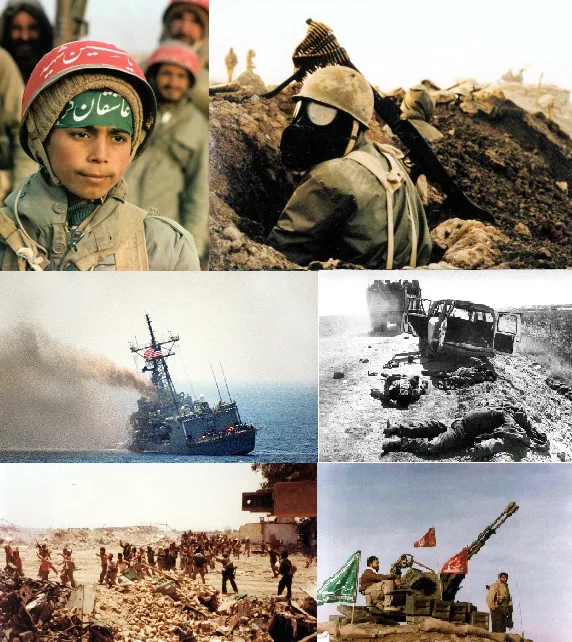
There is an old wartime observation, often attributed to Winston Churchill:
“In wartime, truth is so precious that she should always be attended by a bodyguard of lies.”
Whether Churchill actually said it or not almost doesn’t matter. The sentence captures something essential about war reporting. Every war produces a torrent of claims, military briefings, strategic leaks, patriotic declarations, and angry denials. Truth is somewhere in the storm, but rarely where anyone first says it is.
The war now unfolding between Iran, Israel, and the United States is still young. Yet even in its early days, a curious pattern has emerged. The loudest conversations are about bombs, missiles, and targets destroyed. But it makes me wonder, what are the quieter conversations about?
Did we just start a possible World War III?
I am hypothesizing scenarios that are almost too scary to contemplate. Could it be possible that the whispers in foreign ministries, think tanks, and late-night military briefings are preparing for the worst? This is an article debating possibilities based on actual history, drawing on the grim lessons of wars as recent as Afghanistan, but Iraq and Vietnam as well. It is conjecture, but it is a necessary truth and possibility to contemplate.
When the first missiles were fired, the public story was relatively simple. Diplomacy had failed. The Iranian nuclear program was approaching a dangerous threshold. Israeli intelligence warned of an existential threat. The United States joined Israel in a coordinated campaign to degrade Iran’s military capabilities and nuclear infrastructure.
Then the first bombs fell on Tehran.
Within days, the conflict expanded far beyond a limited “operation.” Iran’s leadership vowed resistance. Iranian shipping lanes and regional allies began moving. Oil markets trembled. And suddenly, the war everyone thought would be short began to feel strangely familiar to students of history.
Not as a mission.
But war.
And when wars begin, the most important questions are often the ones people are afraid to ask.
Narrative 1: This possibility is so frightening that few people want to talk about it
For now, the skies belong to the United States and Israel.
American stealth aircraft, Israeli fighter squadrons, and precision munitions have struck military installations, command centers, missile depots, and infrastructure across Iran. Military analysts describe the air campaign as overwhelming.
In purely technological terms, it is.
But wars are not decided by technology alone.
History offers uncomfortable reminders of that fact. The United States dominated the skies in Vietnam. It dominated the skies in Afghanistan. Air superiority destroyed infrastructure, military bases, and supply lines. Yet those wars were not won in the air.
They were fought on land, in villages, in tunnels, and inside populations that refused to surrender. The USA lost both wars.
Iran is not Vietnam. It is not Afghanistan.
It is something larger.
Iran is a nation of roughly ninety million people, with a deep sense of civilizational identity stretching back thousands of years. Israel, by contrast, has a population of about ten million. That demographic reality does not automatically determine outcomes in war, but it shapes the strategic imagination.
One has to wonder if military planners consider something the public often does not.
Air power is decisive in destroying things.
It is less decisive in controlling what remains afterward.
And I wonder if this is the question quietly circulating in Washington, Jerusalem, and Tehran: if the war does not end quickly, what form does it take?
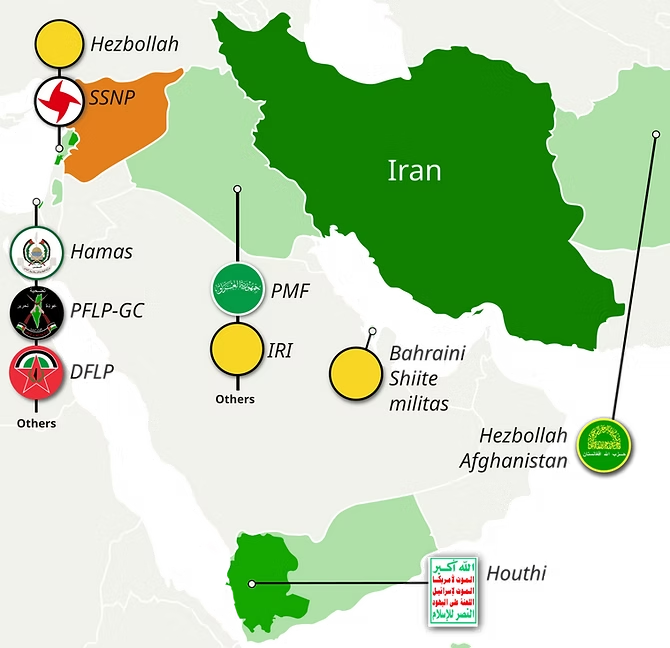
Few analysts with credibility are predicting an Iranian invasion of Israel. Geography alone makes that scenario extremely unlikely. But wars rarely unfold in straight lines. Iran’s strategy has long relied not only on its conventional forces but on a sprawling network of regional partners and proxies, armed movements and militias that stretch across Lebanon, Iraq, Syria, Yemen, and beyond. The question isn’t about who’s talking about Iran bringing boots to Israel, but rather why isn’t anybody talking about it? Iran knows that the USA lost to Vietnam because of their unwilligness to sacrifice more lives, and in Afghanistan, it was just a pointless, endless War according to the everyday American, but a tragedy for Women in Afghanistan.
Hezbollah in Lebanon.
Shiite militias in Iraq.
The Houthis in Yemen.
Various Palestinian factions aligned, to varying degrees, with Tehran. HMM… I suppose they do have the ability to bring boots; now that the country has been bombed, they have to have motivation as well.
For decades, these groups have formed what Iranian strategists sometimes describe as a “ring of resistance.”
In a prolonged war, that ring could become the battlefield.
And that possibility, an expanding multiple front conflict stretching across the Middle East, is precisely the scenario American voters thought they had rejected when both Republicans and Democrats promised to end the era of “forever wars.”
Could that word be appearing again in quiet policy conversations?
Not as a slogan.
As a warning.
Narrative 2: Bombing a capital is turning dissent into patriotism
Before the bombing began, Iran was not a stable society.
For years, the country has experienced waves of protest over economic hardship, political repression, corruption, and the strict religious authority of the ruling establishment. Young Iranians in particular have challenged the system with remarkable courage.
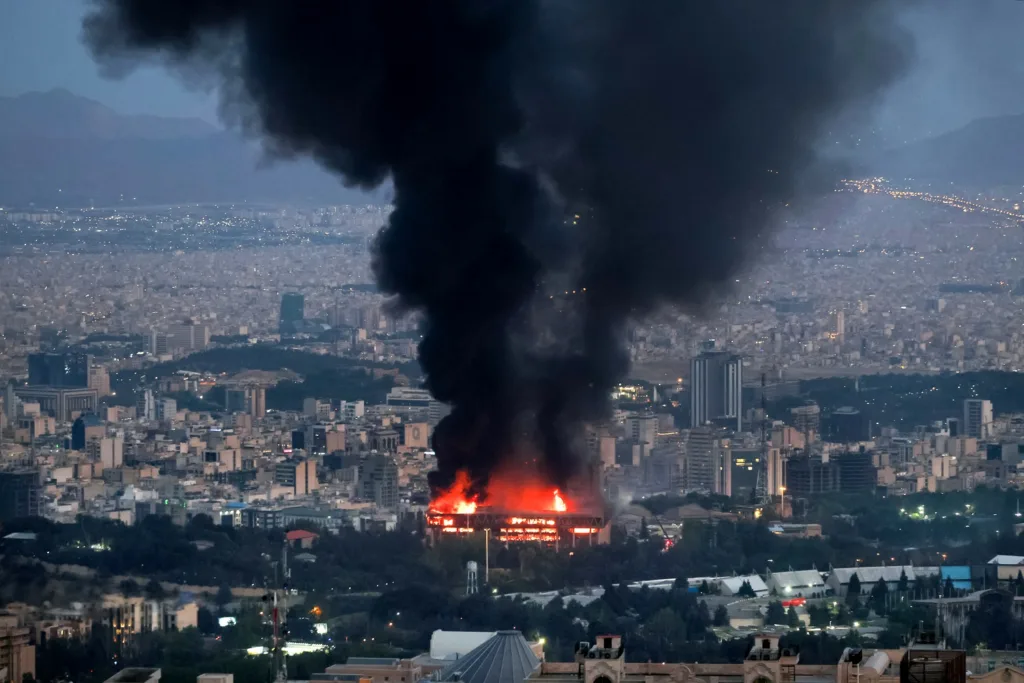
In those moments, one might imagine Western policymakers following a familiar script.
Pressure the regime.
Weaken the leadership.
Encourage the people to rise.
It is a theory that has appeared in many conflicts.
Sometimes it works.
Sometimes it produces the opposite effect.
War has a strange way of rearranging loyalties.
A citizen who despises his government may still defend his country. A neighbor who once marched in protest may pick up a weapon when bombs fall near his home. Political anger can transform into national anger with astonishing speed.
In Tehran today, according to scattered reports from journalists and residents, that emotional shift may already be beginning.
When electricity fails, people blame the attackers.
When hospitals overflow, people blame the attackers.
When families bury their dead, political ideology becomes secondary.
This does not mean Iranians suddenly love their government.
But it may mean something just as powerful: they feel under attack as a nation.
And history shows that societies under attack often become more unified, not less.
Narrative 3: If American troops enter the war, this will not resemble the missions Americans imagine
President Donald Trump has not ruled out the possibility of American ground forces entering the conflict. At the same time, many Americans seem to imagine something closer to a short expedition, a mission similar to recent limited interventions where troops deploy briefly and withdraw as they did in Venezuela, but the reality is more like Narrative 1.
Iran is not built for that kind of war.
Its military doctrine emphasizes endurance, asymmetric warfare, and the mobilization of large volunteer forces in moments of national crisis. The ideology of the Islamic Republic has long framed confrontation with the United States in religious and existential terms.
The phrase
“Death to America”,
shouted in rallies for decades, is not merely rhetoric for many factions inside the Iranian state.
It is part of their worldview.
That does not mean ninety million Iranians are eager for war.
But it does mean that if the conflict transforms into a prolonged struggle involving occupation or ground combat, the United States could face an opponent that views sacrifice differently than Western electorates do.
Military strategists surely understand the danger.
A technologically superior army can defeat opposing formations.
But defeating an entire society’s willingness to endure is far harder.
And I wonder if that is why comparisons to past wars like Vietnam, Afghanistan, and Iraq continue to appear as possibilities.
Not because Iran is identical to those conflicts.
But because wars have a habit of becoming something very different from what their architects initially imagined.
Narrative 4: What may be in America’s interest may not be in Israel’s
Washington and Jerusalem share an alliance, but their strategic clocks do not always run at the same speed.
The United States has global priorities: economic stability, alliances in Asia and Europe, and domestic political pressure to avoid another endless war in the Middle East.
Israel faces a far more immediate calculation.
It lives in the neighborhood.
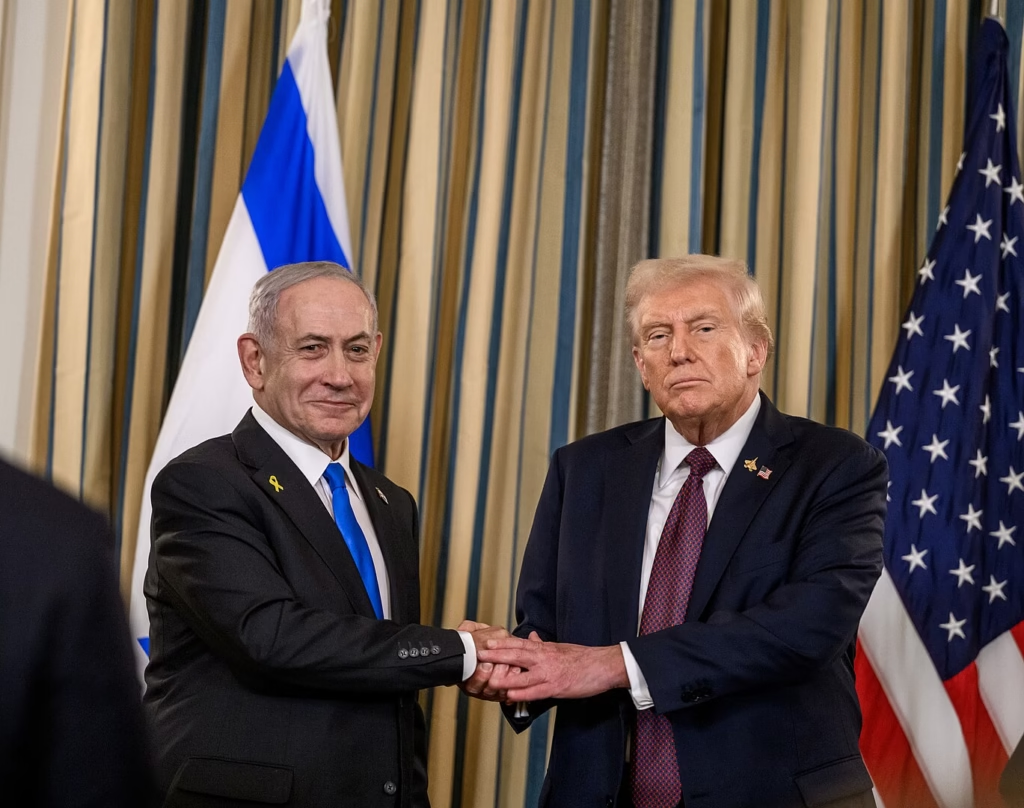
If the United States achieves its primary objective of crippling Iran’s nuclear infrastructure, Washington may feel pressure to declare victory and move on.
Israel cannot move on so easily.
If the war ends prematurely from Israel’s perspective, Tehran could emerge not just weakened but furious, its nuclear ambitions delayed but its hostility intensified.
For Israel, an incomplete war could leave behind an enemy that is not only ideological but deeply enraged by the destruction inflicted on its territory.
For Washington, the calculation may look different.
Ending the war quickly could calm oil markets, reduce military costs, and reassure an American public weary of foreign conflicts.
The alliance between the two nations remains strong.
But their risk tolerance is not identical.
The question beneath the bombing
Wars often begin with clear objectives.
They rarely end with them.
The United States and Israel may have succeeded in disrupting Iran’s nuclear ambitions, at least temporarily. Yet the broader consequences of the war are only beginning to unfold.
The Strait of Hormuz, through which roughly one fifth of the world’s oil supply passes, is now under heightened threat.
Energy markets are volatile.
Shipping insurers are raising prices.
Governments across Europe and Asia are watching nervously.
Oil shocks have a habit of spreading far beyond the battlefield. They reach grocery stores, shipping lanes, interest rates, and elections.
In the meantime, Iran’s network of regional partners, including militias, armed movements, and ideological allies, remains largely intact.
Some have begun participating.
Others appear to be waiting.
This is why some strategists describe the war less as a single conflict and more as a potential opening chapter.
A regional war.
An economic shock.
Perhaps even something larger.
No one can yet say how far the chain reaction might travel.
But I cannot help but wonder if one possibility is already emerging:
The United States may have succeeded in damaging Iran’s nuclear ambitions.
Yet in doing so, it may have opened a strategic Pandora’s box, one whose consequences could reshape the Middle East for years, and perhaps the global economy as well.
Wars often begin with certainty.
They end with questions.
And the most important question of this war may not be whether the bombs hit their targets.
It may be whether the world has just entered a conflict far larger than the one anyone intended to fight.
Which brings us back to Churchill.
To the bodyguard of lies.
When a war expands beyond its original boundaries, the stories used to justify it must expand as well. The simple narrative of a surgical strike morphs into a defense of the global order. The promise of a swift resolution dissolves into a plea for national patience.
And this is the greatest danger of the stories we tell ourselves when the missiles first launch. The lies do not only deceive the adversary. Eventually, they deceive the architects of the war themselves.
If this conflict stretches into a regional war of attrition, the initial explanations will fade. The intelligence briefings, the warnings of existential threat, the promises of technological supremacy, they will all be replaced by a new, more desperate narrative.
The necessity of seeing it through.
Because once a nation commits its wealth and its reputation to a conflict, admitting a miscalculation becomes politically impossible. The war becomes its own justification.
In the end, the truth Churchill spoke of is rarely a strategic secret hidden in a military bunker. The truth is simply that no one is entirely in control of the storm they have unleashed.
By the time the public realizes that the loud conversations about targets were a distraction from the quiet reality of an expanding war, the bodyguard will have done its job.
The truth will have survived.
But the world it returns to will be entirely unrecognizable.
Written by Carlos Taylhardat