
Trump’s 25% iPhone Threat: Apple, X, and the Death of Old Twitter
Subheadline: On one May morning, a few social posts wiped billions off Apple’s value and showed how Elon Musk’s X and Trump’s Truth Social now sit at the center of trade, politics, and information wars.
Editor’s note (updated December 3, 2025): This article reflects the May 23, 2025 tariff threat and subsequent debate about Apple’s supply chain and the role of X and Truth Social in trade policy communication.
3 Narratives News
Just after markets opened on May 23, 2025, traders in New York, engineers in Hyderabad, and iPhone fans scrolling their feeds all met the same sentence: the president of the United States warning that Apple could face a 25% tariff unless iPhones sold in America were built in America. Within minutes, Apple’s value had shed tens of billions of dollars, and screenshots of a Truth Social post were racing across X, the platform once known simply as Twitter.
Context: One Post, Two Platforms, Trillions in the Balance
On May 23, 2025, U.S. President Donald Trump used his social-media megaphone to threaten a new round of tariffs: a 25% levy on iPhones not made in the United States, and a 50% tariff on imports from the European Union. The message went out first on Truth Social, then ricocheted across X and financial news feeds. Reporters at Reuters, the Guardian, ABC and others confirmed the details: the tariff threat would apply not only to Apple but also to rivals like Samsung, and markets reacted instantly as Apple’s share price fell and broader indexes slipped.
For Apple, the timing could hardly have been more sensitive. In April and May, the company had already begun quietly pivoting its supply chain: shipping record volumes of iPhones assembled in India to the United States and preparing for a future in which, by Apple’s own guidance, the majority of U.S.-bound iPhones would be made in India and Vietnam rather than China. Analysts at Reuters and supply-chain publications noted that manufacturing costs in India were estimated to be 5–10% higher than in China, but the move was seen as the price of resilience in a world of tariffs and geopolitical friction.
Trump’s threat pulled those two trends together. A post of fewer than 300 characters did three things at once:
- It challenged Apple’s strategy of diversifying assembly to India as “unacceptable” if the phones were still sold in the United States.
- It turned iPhone manufacturing into a symbol of his promise to bring industrial jobs home, even as analysts warned that building iPhones entirely in the U.S. could push retail prices into the thousands of dollars.
- It demonstrated again that social platforms – especially X and Truth Social – are now primary channels for announcing policies that previously would have emerged through structured briefings, legislation, or formal trade talks.
To understand what changed, it helps to see how Twitter became X, and how that shift reshaped the information environment in which a single presidential post can move markets, rattle allies, and land instantly in your personal feed.
From Twitter to X: What Changed and Why It Matters
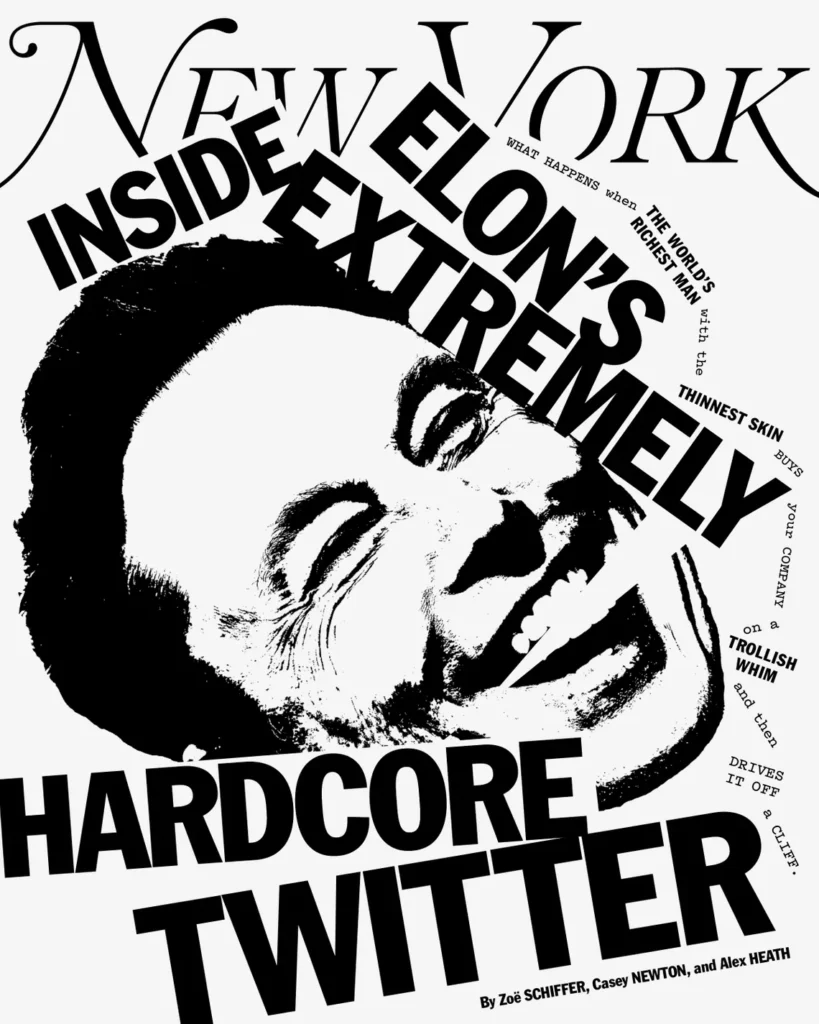
For more than a decade, Twitter’s power came from something deceptively simple: a chronological feed and a hard character limit. Politicians, activists, journalists, and ordinary users all saw, more or less, the same public square. You followed who you liked, and their posts appeared in order. When Twitter helped shape the 2016 U.S. election, it did so largely through that open, real-time structure.
After Elon Musk bought Twitter in 2022 and rebranded it as X, that basic architecture changed. The platform introduced:
- A heavily promoted “For You” feed, which uses recommendation algorithms to decide what you see, whether or not you follow the account.
- Paid verification and boosting, meaning posts by paying subscribers can be prioritized in users’ feeds.
- Private likes, making it harder for outsiders to see what is popular and for users to signal-check content through visible “like” counts.
- Looser moderation policies, coupled with Musk’s self-described “free speech absolutist” approach and repeated attacks on traditional media outlets.
Researchers have been trying to measure what this means. A 2022 study in the journal Proceedings of the National Academy of Sciences found that Twitter’s recommendation system already tended to amplify content from right-leaning politicians more than left-leaning ones, even before Musk’s takeover. After the rebrand, a computational analysis released in late 2024 reported a sharp break in exposure patterns around the time Musk publicly endorsed Trump for the 2024 election, with Republican figures and Musk himself receiving noticeably more visibility.
In November 2025, a separate experiment – published in Science and covered by the Guardian – showed that subtle changes in X’s “For You” feed could increase affective political polarization as much in one week as the United States had seen in three decades, simply by up-ranking posts that expressed partisan animosity and anti-democratic attitudes.
Put simply, X is no longer just a neutral bulletin board. It is a powerful sorting machine, one whose choices about what people see – combined with Trump’s ongoing use of Truth Social and journalists’ habit of screenshotting and amplifying his posts back onto X – now shape how millions of people learn about tariffs, supply chains, and the global economy.
With that backdrop, we can look at the May 23 tariff threat through two very different lenses.
Narrative 1: X as Progress – and a President Finally Talking Past the Gatekeepers
In this narrative, we stay inside the worldview of Trump’s supporters, Musk fans, and those who see X as a long-overdue correction to legacy media power.
Here, the story begins with a promise: that American workers should not have to compete with factories thousands of miles away while global corporations chase cheaper labor. When Trump posts that iPhones sold in the U.S. “should be manufactured and built in the United States, not India or anyplace else,” his supporters hear a straightforward demand. Apple, one of the richest companies on Earth, has benefited from U.S. infrastructure, patents, and consumers; why shouldn’t it bring more of that value back home?
From this perspective, X and Truth Social are tools that finally let a president speak directly to people without the filter of traditional media. For years, supporters argue, legacy outlets framed trade policy in technocratic language, downplaying the concrete impact on towns that lost factories to offshoring. Now, a president can wake up, type a sentence on his phone, and put every CEO, ally, and investor on notice in real time.
Elon Musk’s X fits neatly into that story. Its “For You” feed and paid verification model are seen by fans as a way of rewarding engagement rather than status. Instead of blue-check journalists setting the agenda, ordinary users, influencers, and entrepreneurs can buy a badge, reach a bigger audience, and push back against what they see as a hostile or biased press.
Supporters point to several benefits:
- Transparency and speed: When Trump floats a tariff, everyone can see the exact wording, instantly. There is no waiting for a press conference or a newspaper to arrive the next morning.
- Negotiating leverage: They see tariffs as a bargaining chip, not a final destination. In their view, announcing a 25% tariff on non-U.S.-made iPhones is a way to bring Apple’s leadership to the table and secure new commitments on U.S. investment, even if the final policy is softened or delayed.
- Breaking the “China habit”: Many in this camp believe that decades of relying on Chinese manufacturing have left the U.S. dangerously exposed. Apple’s shift to India and Vietnam is a start, they say, but real security comes only when high-end manufacturing returns to American soil.
- Free-speech platforms: X and Truth Social, in their view, correct what Musk and Trump both describe as an era of shadow bans, opaque algorithms, and one-sided moderation. If that means more hard-edged content in the “For You” feed, they see it as the price of open debate.
Within this narrative, the market panic after the tariff threat is not proof of irresponsibility; it is evidence of how deeply the old order resists change. Investors, analysts, and foreign governments may dislike the uncertainty, but the argument goes that this is what real bargaining looks like. For Trump’s base, the picture is simple: a president using every tool at his disposal – including social media and tariffs – to force global giants like Apple to choose between cheaper overseas labor and full access to the U.S. market.
Seen this way, the transformation of Twitter into X is part of the same project. Old Twitter, with its blue-check hierarchy and content rules, belonged to an establishment that got used to setting the boundaries of acceptable opinion. X, with Musk’s “everything app” ambitions and more permissive approach, is what a new, rough-edged democratic public square looks like.
Narrative 2: X as Decline – and Platforms as Chaos Engines for Policy
In this narrative, we step into the worldview of critics who see X’s evolution and Trump’s tariff diplomacy as symptoms of a deeper erosion of expertise, institutions, and trust.
Here, the same May morning looks very different. Trump’s tariff threat appears not as shrewd bargaining but as a sudden policy lurch delivered without detailed analysis, consultation, or implementation planning. Economists and supply-chain experts quickly point out that Apple’s global manufacturing network is not a light switch. Building iPhones entirely in the United States, they argue, would require building a vast ecosystem of suppliers that does not currently exist and would likely translate into much higher prices for consumers and fewer devices sold overall.
Critics note that Apple’s shift to India and Vietnam was itself a response to earlier tariff waves and geopolitical tension, including Trump’s own trade measures. Mid-stream threats to punish that diversification, they say, make planning even harder both for companies and for countries trying to attract long-term investment.
In this telling, X and Truth Social are not liberating tools but accelerants. The very features Musk highlights – algorithmic feeds tuned for engagement, paid boosts for subscribers, less aggressive moderation – are precisely what researchers now worry about. The PNAS audit showing higher amplification for right-leaning politicians becomes an early warning. Subsequent studies describing X’s “For You” feed as capable of increasing political animosity in a matter of days are treated as confirmation that the platform nudges users toward more divisive content because it keeps them scrolling.
On top of that, fact-checking organizations and media researchers have documented how the removal of many of Twitter’s earlier safeguards – labels on misleading posts, curated election information panels, and stronger limits on verified impersonation – coincided with spikes in misinformation about elections, vaccines, and conflicts abroad. For critics, a tariff threat launched from this environment is not just a policy proposal; it is a message dropped into a system that reliably amplifies the angriest and most simplistic responses.
They also point to the legal and economic aftermath. Trade trackers now read like weather reports: April’s sweeping “baseline” tariffs on many imports; May’s threats of 50% duties on EU goods and 25% on Apple products; subsequent pauses, carve-outs, and legal challenges in U.S. courts over whether the president has the authority to impose such tariffs under emergency laws. Retailers like Costco have already gone to court arguing that some of the broader tariff packages overstep presidential powers. For critics, this is less “art of the deal” and more governance by mood, with platforms acting as loudspeakers rather than guardrails.
In this narrative, the shift from Twitter to X marks a decline. What was once a messy but moderately predictable layer of public conversation has turned, they argue, into a volatile amplification machine where the loudest voices and most polarizing posts get rewarded. Combine that with a president willing to announce major trade actions in one-off posts, and the result, in their eyes, is a world where supply chains, allies, and ordinary workers live at the mercy of algorithm-driven controversy cycles.
The Silent Story: Workers, Users, and the Systems Behind the Screens
Beneath these two sharply different readings – one celebrating direct, disruptive power, the other worrying about institutional erosion – lies a quieter story about people whose lives are shaped by decisions they only ever see as headlines or trending posts.
For American consumers, the tariff threat turned a familiar object into a symbol. The device in their pockets suddenly stood at the intersection of trade wars, supply chains, and platform politics. Most will never read the legal arguments in trade-court filings or the engineering assessments inside Apple’s factories. They simply notice whether the next iPhone costs more, whether their favorite apps still work on X, and whether their feeds feel more tense than they did a few years ago.
For workers in India, Vietnam, and China, Apple’s pivot and Trump’s post are part of the same uncertainty. A factory technician in Tamil Nadu may have taken pride in building devices “for America,” only to see politicians in Washington describe those jobs as ones that “should” exist elsewhere. Suppliers invest in new plants based on multi-year forecasts; a single tariff threat can make those spreadsheets feel fragile overnight.
Inside Apple, engineers and operations teams are balancing delicate trade-offs: choosing where to build, how to keep costs under control, how to meet environmental and labor standards, and how to navigate competing demands from Washington, Beijing, Brussels, and New Delhi. They design redundancies into the supply chain precisely because politics can shift faster than factories.
And for people on X itself, the changes are both subtle and personal. A young organizer who once used Twitter lists and hashtags to follow protests or public-health updates may now find their “For You” feed dominated by more partisan co