
Related reading: 3 Narratives News | About the Editor | Corrections & Editorial Standards
3 Narratives News | March 20, 2026
By Carlos Taylhardat
Editor’s Note: An editorial analysis bridging historical tyranny, from Caligula to Jim Jones—with modern geopolitical crises in Iran and Venezuela, exploring the systemic cost of unrestrained power. The elephant in our story isn't mentioned.
This morning, while walking my dog Bailey, I saw an older woman, likely in her eighties, crouching down ever so slowly. She was searching for something on the ground, her quiet focus gently obstructing the sidewalk. Instantly, my instinct was to help, as I imagined she had lost a ring, a watch, or perhaps her phone.
Before I had the chance to reach down, she showed me what had stopped her: “I am saving a worm from being stepped on.”
She picked up the creature and tossed it to the side, where flowers and plants were growing. That small, unremarkable act lit a thought in me: There are still people who believe every life matters, even when that life is small, different, unseen, and easy to dismiss.
As I continued my walk, one made less “delightful” by Bailey’s habit of challenging other dogs we met, I kept thinking about that worm. Bailey is a brilliant Bordoodle, but she is also instinctive; she wants to dominate. She wants to be in charge. Watching her react so quickly reminded me of the world we live in now, where headlines casually discuss which leaders deserve elimination, which country deserves bombardment, and which population is acceptable collateral damage.
That brief encounter left me wondering whether we have lost something essential. Coming from a family with a legacy in international diplomacy, I have seen how states justify hard action in the name of order – it’s in the history of Venezuela. Yet, instead of valuing life, have we become too reactive, too impulsive, too proud of our ability to strike first? It made me think of three rulers from history whose exaggerated traits we still see in leaders today: Caligula, King Henry VIII, and, in more modern terms, Jim Jones. Each, in his own way, embodied the corruption of judgment and the belief that others existed solely for his will.
The thought grew darker when I considered current flashpoints like Iran and Venezuela. We are told bombing targets in Iran is meant to “help” the people, yet those same people bear the brunt of the displacement and deprivation. In Venezuela, Nicolás Maduro was arrested for tyranny, yet the same government remains.
The Shadow of Unrestrained Power
History is filled with rulers who mistook force for wisdom. Caligula has become a symbol of Roman excess and rule by impulse. King Henry VIII reshaped entire institutions around his personal will, destroying anyone in his path. Jim Jones revealed a different form of distorted power, one built on psychological submission and the collapse of moral limits.
These names endure because they show what happens when leadership loses proportion. The leader no longer sees people; the leader sees instruments, enemies, or obstacles. Today, states rarely speak the language of cult leaders, but they often use the language of “security” and “liberation” to justify similarly brutal outcomes.
Caligula — When Loyalty Becomes Disposable
Gaius Julius Caesar Augustus Germanicus, known as Caligula, began his rule in 37 AD with public support. He was young, charismatic, and seen as a break from the harsh rule of his predecessor, Tiberius. But within months, something shifted. Ancient historians like Suetonius and Cassius Dio describe a ruler who increasingly governed through humiliation, spectacle, and fear.
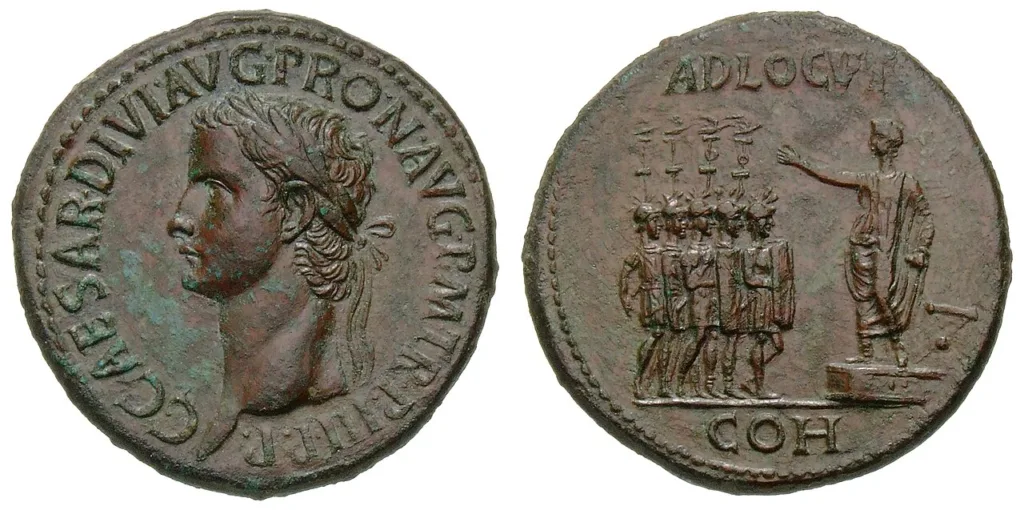
Those closest to him were not protected by their loyalty; they were endangered by it.
Caligula is said to have executed senators, exiled allies, and even turned against members of his own family. Individuals who once held favor found themselves accused of betrayal without warning. The Roman elite, who had initially supported him, became targets of arbitrary punishment. Wealth was confiscated. Public executions became a tool not just of justice, but of demonstration.
What made his rule especially unstable was not simply cruelty, but unpredictability. Loyalty no longer provided safety. It became irrelevant. He forced the wife of one of his Generals to have sex with
By 41 AD, members of his own guard, the Praetorian Guard tasked with protecting him, assassinated him. The very system designed to defend the emperor turned against him, not out of rebellion alone, but out of survival. When proximity to power becomes a liability, collapse is often internal.
King Henry VIII — When Personal Will Rewrites Reality
Henry VIII did not begin as a tyrant in the traditional sense. Early in his reign, he was educated, politically aware, and admired across Europe. But his desire for control over succession, legacy, and personal relationships began to reshape England itself.
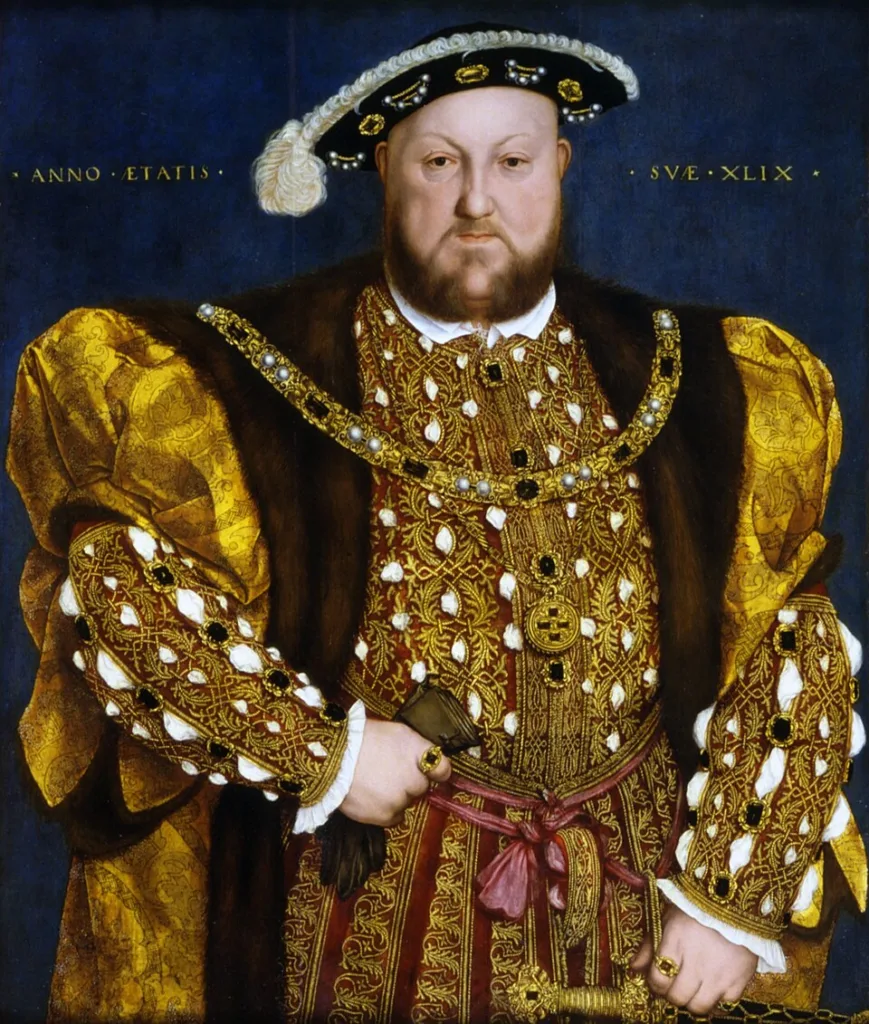
His break from the Catholic Church was not initially about doctrine. It was about authority. When the Pope refused to annul his marriage to Catherine of Aragon, Henry did not accept limitation. He created a new religious structure, the Church of England, placing himself at its head.
This was not simply a political maneuver. It was a reordering of reality around one man’s will.
Those closest to him paid the price.
Thomas More, once a trusted advisor and Lord Chancellor, was executed for refusing to recognize Henry as head of the Church. Anne Boleyn, his second wife, was first elevated to queen, then accused of treason and executed. Thomas Cromwell, the architect of many of Henry’s reforms, was later arrested and executed when he fell out of favor.
These were not distant enemies. These were loyal figures who had enabled, supported, and reinforced Henry’s power.
The pattern becomes clear. Loyalty did not guarantee survival. It only brought individuals closer to the moment when they could be discarded.
Henry’s rule did not collapse like Caligula’s, but it left behind a deeply altered nation, one where institutions had been reshaped to serve personal authority, and where proximity to power carried an unspoken risk.
Jim Jones — When Devotion Becomes a Weapon
Jim Jones operated in a different context, not as a king or emperor, but as a leader of a religious movement. Yet the structure of power he built followed a familiar trajectory.
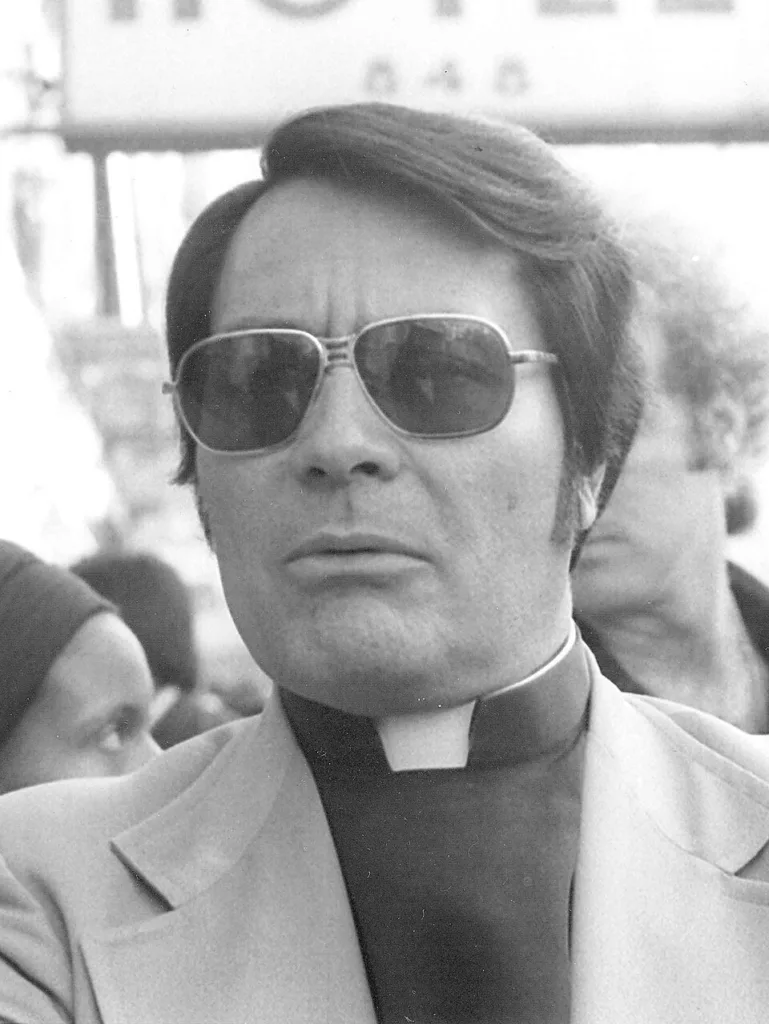
In the 1950s and 60s, Jones gained followers by presenting himself as a champion of equality, racial integration, and social justice. Many who joined him were searching for belonging, purpose, and protection in a turbulent society.
But over time, the movement shifted.
Jones consolidated control by isolating his followers, first socially, then physically, eventually relocating them to Jonestown, a remote settlement in Guyana. There, he controlled information, movement, and communication. Loyalty was not just expected; it was enforced through fear, surveillance, and psychological pressure.
What began as trust became dependency.
In November 1978, after mounting concerns from families and journalists, U.S. Congressman Leo Ryan traveled to Jonestown to investigate. When he and others attempted to leave with defectors, they were attacked and killed at a nearby airstrip.
Shortly after, Jones initiated what he called a “revolutionary act.”
More than 900 people died, including over 300 children, in a mass murder suicide event driven by coercion, manipulation, and fear. Many of those who died had been his most loyal followers.
Their loyalty did not protect them. It bound them.
The Pattern That Repeats
Across these three figures, separated by centuries and context, a pattern emerges.
Power becomes increasingly personal.
Institutions bend or disappear.
Loyalty is no longer rewarded, it is tested.
And eventually, those closest to the leader become the most exposed.
Not because they opposed the leader, but because they remained within reach.
What begins as leadership transforms into something else entirely. A system where trust is replaced by fear, and proximity to authority carries an unspoken cost.
It is this pattern, more than the individuals themselves, that history continues to warn us about.
And it raises a quiet but urgent question for today.
When modern leaders speak in the language of necessity, security, or liberation, how do we recognize the moment when those words begin to conceal something else?
The Case for Decisive Force
There are moments when force is framed not just as justified, but as a moral necessity. From this perspective, dangerous regimes do not moderate; they entrench. They buy time, create facts on the ground, and dare the world to respond when it is already too late. “Negotiation by Force” is an example of today’s rationale.
Supporters of military pressure on Iran argue that when a regime arms proxies and threatens neighbors, the moral failure lies in waiting. Similarly, in Venezuela, the logic suggests that arresting a tyrant is an “overdue correction.” If the system remains damaged, it simply proves how deeply the rot had set in and why the central figure had to be removed first. Those who believe this do not see force as cruelty; they see it as a reluctant responsibility.
The Human Cost of Strategic Maps
But what if the language of liberation has become a disguise for human suffering? What if the people supposedly being helped experience the intervention only as fire from the sky, hunger, and the daily humiliation of survival?
This is where the worm returns. The woman on the sidewalk did not ask what the worm represented in a geopolitical objective. She saw something vulnerable and acted with care. The modern world often does the opposite: it begins with strategic objectives and only later counts the vulnerable.
To a family living through air raid sirens, promises of a “freer future” can sound abstract and cruel. In Venezuela, Maduro may be gone, but if the patronage networks and the culture of fear remain, the people are still trapped. This narrative insists we look at the ordinary person, the mother, the student, the pensioner, before the victory statement is read.
Perspective
There is something almost absurd about comparing world affairs to my dog Bailey, yet the comparison stuck. Bailey reacts quickly; she asserts her will on the sidewalk. That instinct in a dog is natural; in a nation or an empire, it is catastrophic.
The older woman offered the opposite model: she paused, she noticed what others missed, and she used her freedom to protect rather than dominate. The deepest crisis in modern leadership is not a lack of strength, but a lack of disciplined compassion.
Editorial Insight
Diplomacy, at its best, begins with the refusal to forget the human being hidden inside the strategic map. That woman did in miniature what healthy civilizations must do at scale: she interrupted convenience to protect a vulnerable life.
Civilizations are shaped by tiny moral reflexes, whether we step over the vulnerable or whether we notice them at all. The worm is not a geopolitical actor, yet the woman’s gesture exposed the danger of our age: we celebrate power so quickly that we fail to ask what it is doing to our capacity for reverence.
As I finished my walk, with Bailey still alert and ready to prove herself against the next dog, I thought again about the woman and the worm. One moved on instinct, the other on conscience. Between those two reactions lies the future of power.
Which instinct is guiding the world right now?
Key Takeaways
- A small act of mercy can illuminate how modern societies prioritize (or ignore) vulnerable life.
- Figures like Caligula and Jim Jones serve as warnings of power untethered from moral restraint.
- The removal of a leader does not necessarily dismantle the system of repression they leave behind.
- The “Third Narrative” suggests that true leadership requires the discipline to pause for the vulnerable.
About the editor: Read more about Carlos Taylhardat and the mission behind 3 Narratives News on the About the Editor page.
AI disclosure: This article was developed with AI-assisted drafting support and reviewed under human editorial responsibility. Final framing and analysis remain with 3 Narratives News.