
Analysis: Worst case, Washington keeps the oil while the same inner circle tightens control, and the country sinks further. Best case, oil revenue becomes a bridge to investment, elections, and a long, bruising repair job.
3 Narratives News | January 5, 2026
Editor’s Note: This is a scenario analysis built on public reporting and explicit assumptions regarding the post-Maduro transition. It is not a claim of certainty. Where facts are still moving, we say so.
Intro: The Sound of History Arriving
In Caracas, history rarely arrives politely. It arrives as a sound you cannot place at first, a sudden absence on television, a rumor that spreads faster than the power can stay on. I am now caught in two places. I live in Vancouver and am fortunate to have a beautiful family living in a Canadian culture, but my heart still beats towards Venezuela, the place my Father represented for almost fifty years initially as a Naval Captain for 30 years, then a Diplomat for an additional 18 years. My Mother, two sisters, a brother and countless other relatives remain there, and we all have one thing in common, hope for the best.
Over the last 48 hours, Venezuela has lived a headline that reads like a century compressed. Donald Trump declares Nicolás Maduro captured after U.S. strikes and says the United States will “run” Venezuela during a transition. Marco Rubio insists it is “not a war against Venezuela,” describing an “oil quarantine” as leverage. In Caracas, the state moves to continuity, not surrender, with Delcy Rodríguez elevated as acting president and the armed forces’ loyalty signalling that the system is not synonymous with one man.
If you have been following our coverage, you know the central problem is not only who sits in the palace. It is who controls the pipes, the ports, the diluent, the tankers, and the cash flow that keeps a modern country alive.
Related reading: Maduro Captured After U.S. Strikes | Who Runs Venezuela Today? | US–Venezuela Crisis: Trump’s Blockade & Machado’s Escape
Context: What We Know From the Last 48 Hours
- Jan 3: Trump announces Maduro and Cilia Flores were captured after strikes near Caracas. (Our report)
- Jan 4: Rubio frames the operation as a fight against trafficking organizations, naming the “oil quarantine” as Washington’s leverage. (Our report)
- Jan 4–5: Reuters describes PDVSA cutting output as exports stall under embargo. China’s ongoing role as buyer and investor complicates any “reset.” (Reuters)
Assumptions Deck: The Oil Math We’re Using
To talk honestly about “worse” or “better,” we need a shared calculator. Venezuela’s economy is not only oil, but oil is the country’s primary source of hard currency. Analysts note that oil is more than 90 percent of exports, underwriting the state’s ability to import food and medicine.
Baseline production: 1.1 million barrels per day (bpd) in 2025.
Baseline exports: 0.85 to 0.95 million bpd.
Price assumption: $55 per barrel (scenario baseline).
Net cash assumption: Venezuela does not realize full Brent pricing. Between heavy crude discounts and shipping risk, we model $8B to $12B in annual “usable” cash flow.
| Scenario baseline | Exports (bpd) | Gross oil revenue at $55 | Estimated usable cash flow |
|---|---|---|---|
| Current range (pre-disruption) | 900,000 | $18.1B | $8B–$12B |
Why this matters: Losing $8B–$12B in hard currency is not a budget cut. It is an import crisis, a fuel crisis, and a migration accelerator.
Where I Landed: The Tyranny Remains
Venezuela may have lost a tyrant, Nicolas Maduro, but the tyranny, the government, remains.
If the United States keeps PDVSA revenue in the U.S., Venezuela goes from impoverished to worse, which would be Narrative 1 ( worst case ). If the oil expands under real investment and the revenue is shared with Venezuelans. If a democratically elected administration is installed – Edmundo González and Maria Corina Machado or a fair election, Venezuela can count on and hope for true negotiations. It produces the ugliest kind of question: can a country be “saved” by a power that does not feel obligated to love it? America First.
Narrative 1 (Worst Case): The Oil Goes North, The Regime Tightens
In the regime’s surviving inner circle, the story is simple: Maduro’s capture was a kidnapping. The state’s first duty is continuity, then purification (What does that mean? Not good).
If Washington seizes the head, it can recruit helpers. If it quarantines oil, it can buy betrayals. The response becomes an internal audit conducted by fear. The armed forces’ senior leadership moves to identify “collaborators.” Now add the second blow: if oil revenue is captured or frozen, the government loses the hard currency that pays for normal life.
The worst-case chain reaction:
- Hard currency shock: Remove $8B–$12B of usable cash flow, and imports compress sharply (food, medicine, fuel additives).
- Production feedback loop: Output falls further because the system cannot move it.
- Domestic fuel stress: Less diluent means more shortages and black-market pricing.
Headline outcome: The tyrant is gone, but the system survives on repression. Venezuela becomes poorer, angrier, and more migratory. This case scenario turns the entire country into a desert inside an oasis.
Narrative 2 (Best Case): Oil as a Bridge to Democracy
In the best case, Maduro’s removal is not the victory—it is the opening. The “oil quarantine” becomes a forcing mechanism to prevent the old system from laundering itself into permanence. Whether it’s Maria Corina Machado or a free election, the Venezuelan’s can hope to return to what it was in the best days, a happy nation where people immigrate to and not from.
Venezuela has the greatest oil reserves, but also has easy channels of distribution, where it could not just be the greatest oil reserves, but also the most profitable oil industry in the World. Saudi Arabia has to go through a desert before delivery, in Canada and Russia, the oil sands are in a rare location with sub-zero temperatures.
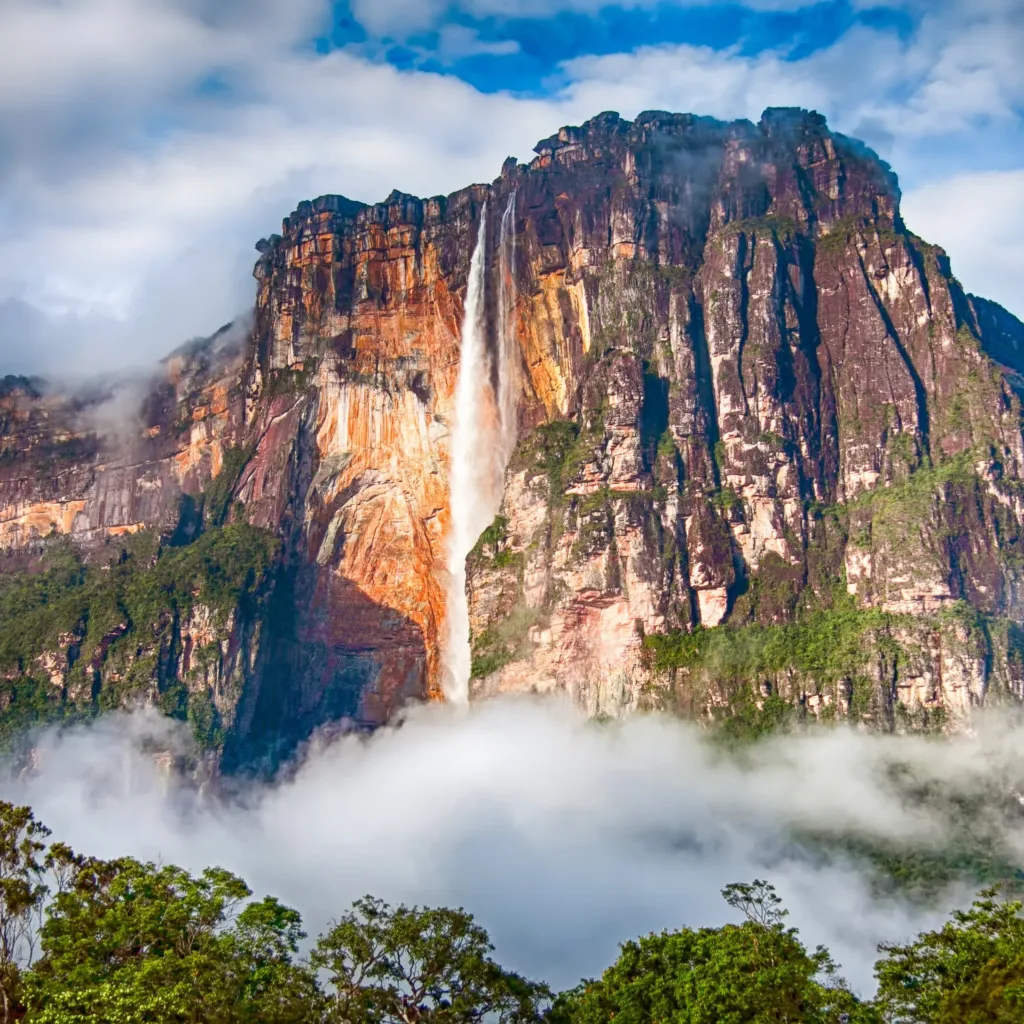
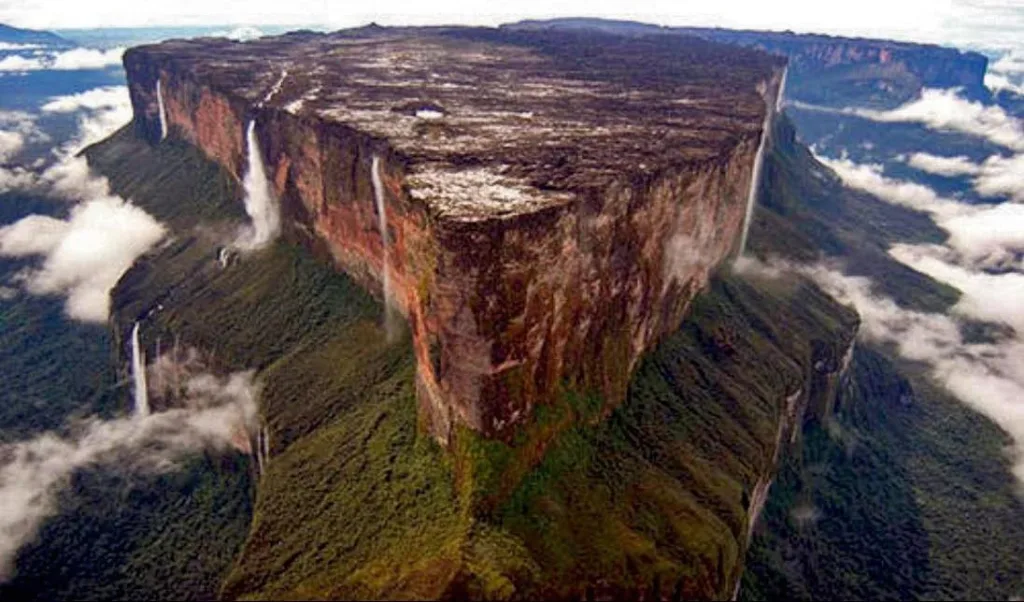
Besides oil, Venezuela has rare earth, gold mines and the most beautiful rainforests in the world. Tourism can once again thrive in Margarita Island.

The best case mechanics:
- Visible Revenue: An audited oil escrow fund imports and grid repair first.
- Operational Stabilization: Restore diluent supply chains and stop the production bleed.
- Political Legitimacy: María Corina Machado or a new freely chosen leadership becomes part of the governing reality.
Best case projection: If exports rise to 2.2 million bpd within 5–7 years, a transparent share delivering $15B–$25B into the domestic economy is transformational.
Narrative 3 (The Silent Story): Between Gasoline Lines and Visa Lines
Venezuela’s silent story is not Trump’s intention or Delcy’s defiance. It is the mother counting pills. It is the teenager whose life plan is a route, not a career. Lineups for food and medicine, and crime beyond any acceptable measure.
Nearly seven million Venezuelans are already displaced. That number is not abstract; it is every WhatsApp group with an empty chair. If the worst case arrives, the next wave is logistical, not ideological. People leave because the refrigerator is empty. The question is whether this is the hinge, or just another chapter in a long Venezuelan lesson: removing a man is easier than removing a system.
FAQ: Venezuela's Oil & Future

What is the value of Venezuela's oil revenue right now?

At ~900,000 barrels per day in exports, gross revenue is roughly $18B/year (at $55/barrel). However, usable cash flow is likely $8B–$12B due to heavy discounts and debt repayments.

Why does losing oil revenue hurt the average Venezuelan?

Oil provides the hard currency to import food, medicine, and fuel additives. When that money stops, shelves go empty and gasoline shortages spike immediately.

How long to rebuild Venezuela's oil industry?

Experts estimate it could take a decade and over $100 billion in investment to fully restore the industry, requiring legal stability that investors currently lack.

What defines a "good faith" transition?

Audited revenue sharing that prioritizes humanitarian imports, legal protections for global investment, and a credible path to free elections.
About the Author: Carlos Taylhardat
Carlos is the founder of 3 Narratives News. The son of Carlos A. Taylhardat, a career diplomat and Naval Captain who served Venezuela for 50 years, Carlos brings a lifetime of observation on Venezuelan geopolitics, balancing the view from the diaspora with the reality on the ground in Caracas.