Related reading:
Trump’s “Board of Peace” for Gaza, and the Mark Carney Question |
Davos 2026, Greenland, and the Return of “Might Makes Right” |
Peace Through Strength: A Gamble That Can Backfire |
About the Editor |
Corrections & Editorial Standards
Subheadline: Trump calls it “the Greatest and Most Prestigious Board ever assembled.” Some allies call it a power grab. One invitation was pulled after a standing ovation speech.
Byline: 3 Narratives News | January 23, 2026
It began the way modern geopolitics often begins: not with a treaty, not with a vote, but with a branded announcement and a signature ceremony staged for cameras. Davos, the alpine showroom of the global order, has seen its share of grand claims. But this week’s claim came with a title that sounded like it was designed to fit on a plaque.
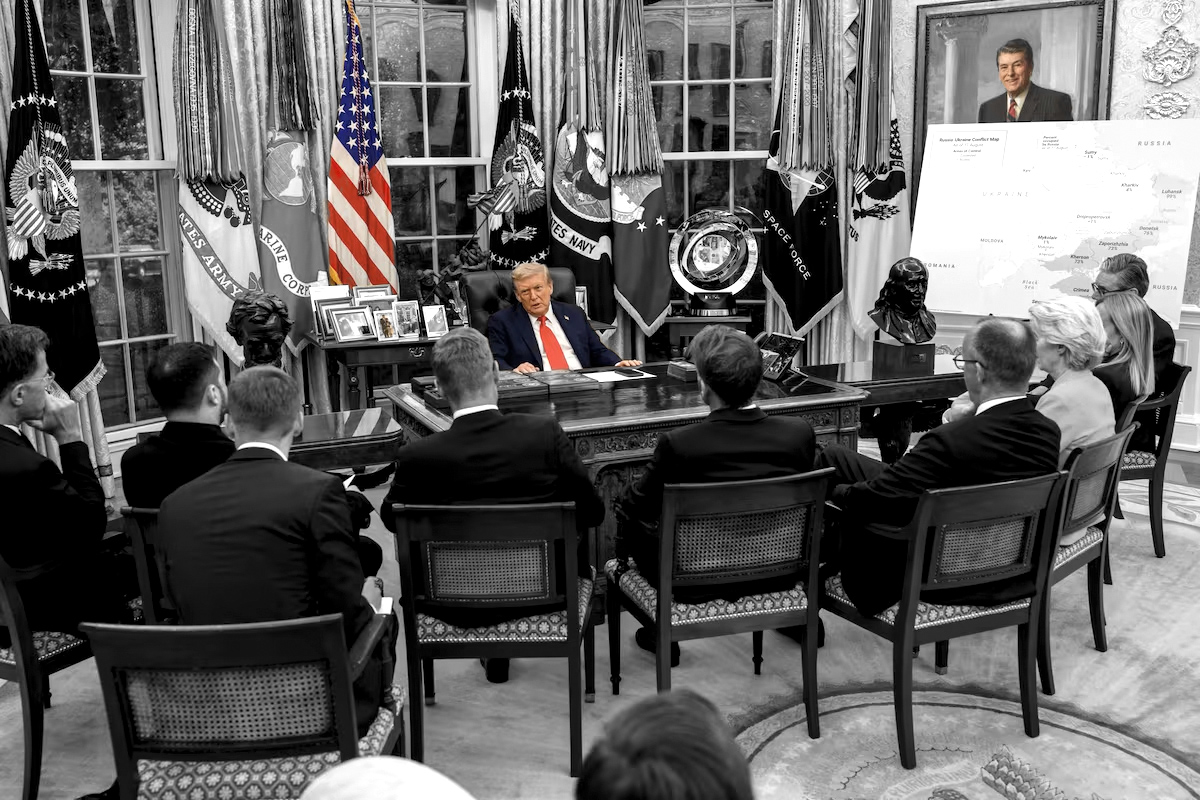
President Donald Trump has launched what he calls the Board of Peace—not “delegation,” not “council,” not the careful, committee-scented language of the United Nations. A board. A structure that sounds like governance-by-CEO, exported into the realm where wars are supposed to be settled by legitimacy, law, and the exhausting patience of diplomacy.
Trump’s pitch is maximal. In one post announcing it, he wrote that it was “the Greatest and Most Prestigious Board ever assembled at any time, any place.” Supporters hear audacity. Skeptics hear a warning label.
Callout: One day after Canada’s Prime Minister Mark Carney used Davos to argue that “compliance” will not “buy safety,” Trump’s team withdrew Canada’s invitation to join the Board.
What the “Board of Peace” Is (Fact-Checked Name), and What It Claims to Do
The official name is the Board of Peace. It emerged as part of the Trump administration’s Gaza plan, then expanded—by Trump’s own telling—into an instrument meant to address conflicts beyond Gaza, potentially worldwide.
In Trump’s framing, the Board is designed to do what existing institutions “can’t” or “won’t”: broker and monitor ceasefires, coordinate security arrangements, and organize rebuilding in places emerging from war. In the White House’s description of the Gaza phase, it is tied to a 20-point plan that moves from fighting to governance, reconstruction, and “accountability.”
There is a key practical detail buried inside the grandeur: the Board is built like a membership organization. Under its draft charter as described by multiple reports, countries rotate through three-year terms, but can purchase permanence by funding the Board at $1 billion each. That is not how the U.N. works. It is, however, how clubs work.
How the Structure Works (As Announced So Far)
The Board’s architecture is more corporate than parliamentary, with an executive core and operational layers under it.
- Chairmanship: Trump serves as the inaugural Chairman and has described broad authority over the Board’s direction.
- Founding Executive Board: The White House named a seven-person Executive Board for Gaza-related oversight and portfolios (governance, reconstruction, investment, funding, regional relations).
- On-the-ground governance node: The White House says Gaza’s day-to-day civil restoration is led by the National Committee for the Administration of Gaza (NCAG), headed by Dr. Ali Sha’ath.
- High Representative for Gaza: The White House named Nickolay Mladenov as the “link” between the Board and the NCAG.
- International Stabilization Force: The plan includes an ISF with a named commander (Major General Jasper Jeffers), intended to support security, demilitarization, and the flow of aid and rebuilding materials.
- Gaza Executive Board: A second operational board was announced with a list of members meant to support governance and “best-in-class services.”
If you’re wondering what the Board “is” in diplomatic terms—treaty body, alliance, U.N. subsidiary—the answer is: it depends on who you ask. The U.S. calls it coordination. Critics call it competition with the U.N. The U.N. itself has signaled engagement only within the Gaza mandate that was endorsed by the Security Council resolution attached to the plan.
Who Was Invited, Who Accepted, Who Didn’t, and Who Got Uninvited
The invitation list is large. Roughly 50 invitations were sent. As of mid-week in Davos, a senior U.S. official said about 35 leaders had committed. That headline number masks the more revealing story: who is enthusiastic, who is cautious, and who is openly refusing.
Countries reported as having accepted so far (examples named publicly):
- Middle East partners: Israel, Saudi Arabia, United Arab Emirates, Bahrain, Jordan, Qatar, Egypt
- NATO members: Turkey; and in Europe, Hungary (and later reporting also noted Bulgaria’s attendance at the launch ceremony)
- Other states named in reporting: Morocco, Pakistan, Indonesia, Kosovo, Uzbekistan, Kazakhstan, Paraguay, Vietnam
- South Caucasus: Armenia and Azerbaijan (following a U.S.-brokered agreement last year)
- Most controversial acceptance on the list: Belarus
Countries reported as refusing, intending to refuse, or not committing publicly:
- Declined: Norway, Sweden
- Declined (explicitly): Spain. Prime Minister Pedro Sánchez said, “We appreciate the invitation, but we decline.”
- Intends to decline (per reporting): France
- Not joining “for now” (reported): Britain; Germany and Japan have not taken a clear public stance
- Evaluating / ambiguous: Ukraine has said it is examining the invitation; Russia and China have not committed
The invitation that was withdrawn: Canada. After Carney publicly argued in Davos that “compliance” does not buy safety, Trump posted a letter withdrawing Canada’s invitation. In the same sequence, Reuters reported Carney’s speech received a standing ovation—rare, in a room that normally applauds politely and moves on.
Why Spain Declined (and Why That Matters)
Spain’s refusal wasn’t quiet, and it wasn’t wrapped in the diplomatic language of “timing” or “scheduling.” It was framed as a values argument: Spain said the decision was consistent with its commitment to international law, the U.N., and multilateralism. Sánchez also pointed to an omission that lands like a moral question: he said the Board did not include the Palestinian Authority.
For Trump’s supporters, Spain’s refusal becomes proof of why a new structure is needed: old institutions, old reflexes, old “process.” For critics, Spain’s refusal becomes the canary in the coal mine: a warning that the Board’s legitimacy problem will not be solved by branding, prestige, or membership fees.
What Trump Says It Is: “The Greatest and Most Prestigious Board Ever Assembled”
To understand Narrative 1, you have to enter the worldview where Trump’s language is not exaggeration but strategy: the use of scale, confidence, and spectacle as a governing tool.
In that worldview, the Board is “prestigious” because it is designed to be consequential. Trump has argued that once it is fully formed, the Board can “do pretty much whatever we want to do,” in conjunction with the United Nations. His White House rollout has framed the Board as the apparatus that will mobilize resources, enforce accountability, and make demilitarization and rebuilding more than slogans.
In other words: it’s a peace instrument built like an operating company. It has portfolios. It has appointed executives. It has a field link between strategy and governance. It has an announced security force concept. It has a funding mechanism that sidesteps the slow, donor-fatigued rituals that often stall reconstruction.
And it has a recruiting logic. If a state wants influence over what comes next in Gaza (and potentially elsewhere), the Board is positioned as the new door.
Narrative 1: The Greatest Board Ever Assembled, Because It’s Built to Act
From this perspective, the Board of Peace is the antidote to paralysis.
The United Nations can authorize, condemn, and convene, but it rarely executes with speed. Its legitimacy is global, but its machinery is slow, vetoed, and exhausted by competing priorities. Trump’s Board, supporters argue, is not meant to replace the U.N. It is meant to outperform it where performance matters most: ceasefires that hold, aid that arrives, reconstruction that actually begins.
The “prestige” is partly theater, yes—but it is also a recruitment weapon. If the Board can assemble a bloc that includes key regional powers, major donors, and security guarantors, then it becomes something the world must take seriously, regardless of how offended the old institutions feel.
In this narrative, critics are trapped in nostalgia. They want legitimacy without leverage. Trump is offering the reverse: leverage first, legitimacy built afterward—through results.
Supporters’ closing claim: If peace is judged by outcomes, not process, then a board that can mobilize money, coordinate security, and enforce reconstruction milestones could end up being “prestigious” the only way that matters—because it works.
Narrative 2: Not So Great, Because It Concentrates Power and Turns Peace Into a Club
From the opposing worldview, the Board isn’t bold. It’s destabilizing.
Peace built on a single leader’s chairmanship looks less like multilateralism and more like hierarchy. The $1 billion pathway to permanent membership looks less like shared responsibility and more like pay-to-stay influence. And when the chairman is also a tariff-wielding, pressure-first negotiator, allies hear a familiar message: join, or pay later.
Spain’s refusal becomes the cleanest articulation of the critique: the U.N. system may be flawed, but it is the only place where sovereignty is supposed to be equal in theory, not purchased in practice. Meanwhile, other allies have balked or stayed silent. Not because they don’t want peace, but because they don’t want a precedent where one country’s leader can assemble a “world board,” claim U.N.-adjacent legitimacy, then expand its remit to other conflicts with unclear legal authority.
This is where Carney’s Davos speech becomes gasoline on the argument. Carney warned that in an era of great power rivalry, there is a temptation “to go along to get along… to hope that compliance will buy safety.” Then he delivered the sentence that traveled faster than any panel discussion: “It won’t.”
Hours later, Canada’s invitation was pulled.
Critics’ closing claim: If a “peace board” punishes dissent by revoking invitations, it is not a peace architecture. It is a loyalty architecture dressed as diplomacy.
Peace Boards Don’t Feed Children
Behind the glamour of Davos, there is a quieter geography where “peace” is not a boardroom word.
Across Gaza, Ukraine, parts of Africa, and the fractured edges of states that are collapsing under hunger and displacement, families measure “peace” in smaller units: whether schools reopen, whether clinics have medicine, whether the next meal arrives, whether a night passes without panic.
Trump’s Board of Peace might become a genuine machine for stabilizing a shattered place. Or it might become another arena where great powers compete to name the solution while ordinary people wait for the result.
The hardest truth is also the simplest: most victims of war don’t care what the structure is called. Board, NATO, U.N., coalition, summit. They care whether it produces the first ordinary day in years.
The question that lingers after the ceremony: Is the Board built to end wars—or to reorganize who gets to manage them?
Key Takeaways
- Trump has launched the Board of Peace at Davos, initially tied to Gaza but framed as expandable to other conflicts.
- About 35 of roughly 50 invited leaders were reported as committed as of mid-week.
- Spain declined publicly, citing multilateralism and concerns about the U.N. system.
- Canada’s invitation was withdrawn after Carney’s Davos speech warning that “compliance” won’t “buy safety.”
- The Board’s structure includes an Executive Board, Gaza governance framework (NCAG), and an International Stabilization Force concept.
Questions This Article Answers
- What is Trump’s “Board of Peace,” and what is it supposed to do?
- How is the Board structured, and who is running it?
- Which countries were invited, which accepted, and which refused?
- Why did Spain decline, and why was Canada’s invitation withdrawn?
- Is this a peace mechanism—or a new kind of power arrangement?
FAQ
What is the “Board of Peace” in plain English?
It’s a Trump-led international initiative launched at Davos that claims it can broker and monitor ceasefires, coordinate security arrangements, and organize reconstruction, starting with Gaza and potentially expanding to other conflicts.
How is it different from the United Nations?
The U.N. is a treaty-based global institution with formal procedures and veto powers inside the Security Council. The Board is a separate, Trump-chaired structure with an Executive Board and a membership model, including talk of permanent seats tied to major funding commitments.
Who joined and who refused?
Reporting says around 35 leaders committed out of roughly 50 invited. Several U.S. partners in the Middle East reportedly joined. Norway, Sweden, and Spain declined, while some major Western allies have not joined “for now” or have not taken a clear public stance.
Why was Canada’s invitation withdrawn?
After Carney warned at Davos that “compliance” will not “buy safety,” Trump posted a letter withdrawing Canada’s invitation to join the Board.
Does the Board have legal authority?
It has a defined connection to Gaza through a U.N. Security Council resolution linked to Trump’s plan, but beyond Gaza, reporting suggests its authority and enforcement mechanisms are unclear.
External sources for readers:
White House: Trump’s Comprehensive Plan and Board structure |
UN Security Council (official) |
WEF Annual Meeting 2026 (official)