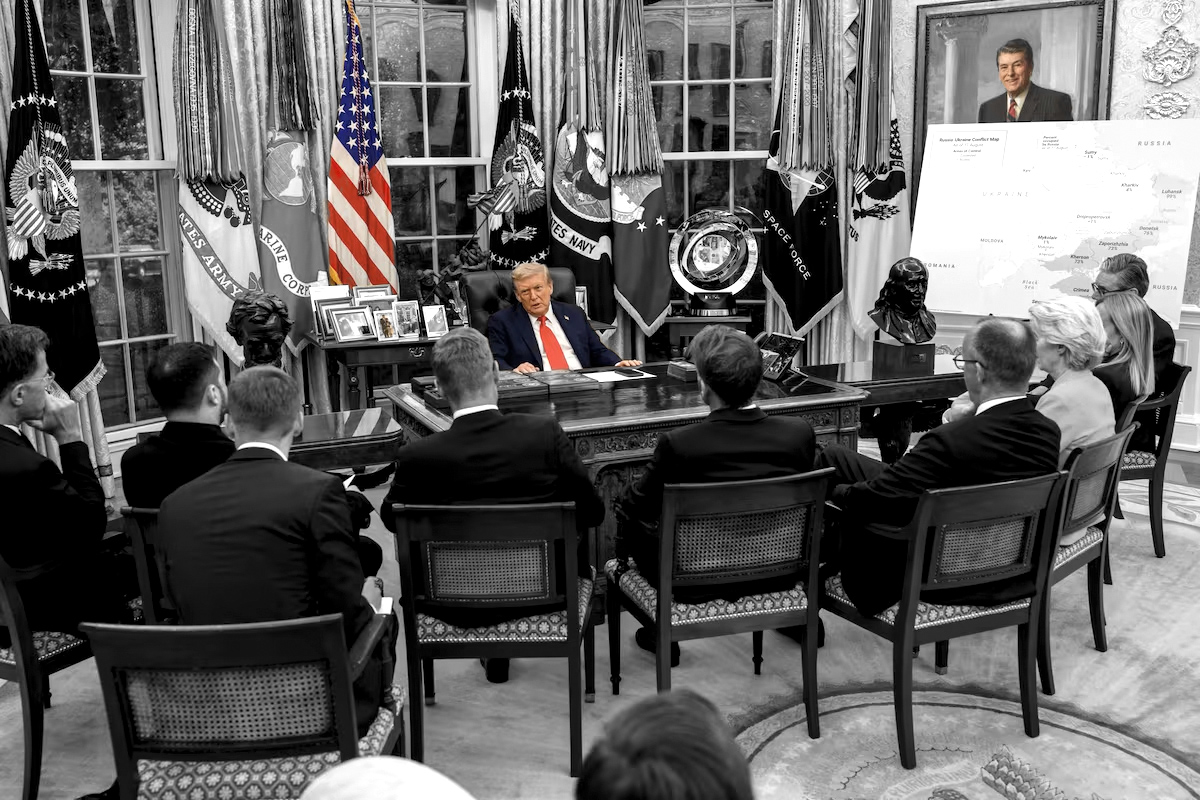
“The future belongs to those who believe in the beauty of their dreams.” – Eleanor Roosevelt
Elon Musk helped make electric cars cool and rockets reusable. Recently, as the face of Trump’s Department of Government Efficiency, he was trying to re-engineer the U.S. government itself. Was he saving America from waste—or pushing democracy past its limits?
By Alex Rivera | 3 Narratives News | May 2, 2025
I remember the first time I test-drove a Tesla Model S back in 2013. It felt like driving tomorrow. The acceleration was seamless, the design bold yet clean, and the silence, strangely powerful. I stepped out of the car thinking, He did it. Elon Musk had actually made electric cars desirable. Not just feasible, not just eco-conscious, this was thrilling.
Inspired, I bought Ashlee Vance’s early biography of Musk and read it in a week. Years later, Walter Isaacson would add his own portrait of the same restless mind. At the time, Elon symbolized something rare: a visionary who wasn’t just imagining sci-fi futures, but building them one risky bet at a time.
Fast-forward to 2025. Elon Musk is no longer just the architect of Tesla, SpaceX, or Starlink; he was also one of the most powerful unelected figures in Washington. As the driving force behind the Department of Government Efficiency, or DOGE, in Donald Trump’s second term, Musk had moved from innovator to policymaker. The same mind that gave us reusable rockets was now reshaping the machinery of government and drawing headlines, admiration and fury in the process. The USA government has now scrapped the entire DOGE project.
So here are two narratives about Elon Musk. The third, as always, is yours to decide.
Narrative 1: The Visionary Who Wants to Save America
“When something is important enough, you do it even if the odds are not in your favor.” – Elon Musk
In this version of the story, Elon Musk is still the man who looks at the biggest, dullest problems and decides they are simply engineering challenges in disguise. After electric cars, rockets and satellites, the logic goes, what’s left but government itself? Federal bureaucracy is the final boss.
As head of DOGE, Musk pitched a simple but radical mandate: cut waste, digitize outdated systems, and force a sprawling federal apparatus to work more like a lean tech company. At launch, it sounded like the natural sequel to Tesla and SpaceX, just with fluorescent lighting and GSA contracts instead of launch pads.
In speeches and interviews, Musk claimed DOGE had already saved the government well over $160 billion by eliminating duplicated programs, renegotiating contracts and shrinking payrolls. He called it his “most patriotic mission,” insisting that his crusade was not primarily about money, but about respect for taxpayers and a belief that slow, paper-based bureaucracies were themselves a quiet form of injustice.
Supporters saw the same relentless, sleep-in-the-office work ethic that defined his earlier ventures. They pointed to late-night DOGE emails demanding, “What did you do last week?” as proof that Musk wanted civil servants to feel the same urgency as engineers racing a launch window. Some agency leaders, off camera, admitted they were quietly relieved to see archaic IT systems and procurement rules finally ripped out and replaced.
Even now, with DOGE formally scrapped and written off in Washington as Musk’s biggest failure, his admirers don’t see a cautionary tale so much as a confirmation of their worldview. Of course the project blew up; they say any attempt to push a vast bureaucracy toward efficiency was always going to trigger antibodies. If anything, the collapse proves how entrenched the system is.
In this telling, Musk remains the rare private-sector figure willing to stake his reputation on the most thankless task in politics: telling every department, every contractor, and every member of Congress that the money fountain will not flow forever. He is not a partisan, his defenders say, but a systems thinker. If DOGE had been allowed to succeed, they argue, it would have freed up resources for everything from defense to child care by cutting what should have been cut long ago.
It helps that Musk was never operating in a vacuum. Trump’s second-term agenda promised a trillion dollars in deficit reduction. In our look at Trump’s first 100 days back in office, DOGE appeared as the sharp end of that promise, the place where slogans like “drain the swamp” turned into spreadsheets, firings and rewritten rules. What came next, the scrapping of DOGE and the one-day thaw between Trump and Musk that dissolved into a barrage of posts and counter-posts on X—is part of the larger saga explored in the update below. Inside this first narrative, though, what still defines DOGE is the ambition behind it, not the wreckage it left behind.
Narrative 2: A Billionaire’s Ego Run Amok
“Power tends to corrupt, and absolute power corrupts absolutely.” – Lord Acton
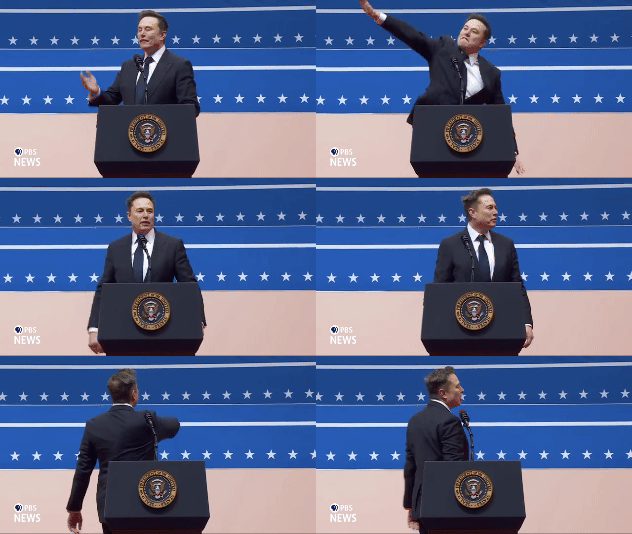
To others, Musk’s foray into federal power is not heroic disruption at all; it is a dangerous experiment in letting one billionaire test his theories on the entire civil service.
Critics point to DOGE’s track record as proof. Under Musk’s leadership, hundreds of thousands of federal workers faced layoffs, buyout offers or abrupt role changes. Agencies that handled everything from public health to environmental monitoring saw budgets slashed or merged. DOGE trumpeted headline numbers about savings, but outside analysts and watchdogs have told a different story.
A nonpartisan group, the Partnership for Public Service, estimated that the mass firings, rehirings and legal disputes around DOGE will cost taxpayers roughly $135 billion in a single fiscal year once lost productivity, paid leave and litigation are accounted for. Independent reporting has echoed that conclusion: whatever DOGE had saved on paper, the true financial impact was murkier and may even run in the opposite direction.
Meanwhile, federal workers describe an atmosphere of fear and chaos. Lawsuits and court orders have forced the administration to reinstate tens of thousands of employees who were dismissed in what judges called sham performance reviews. Agencies have been whipsawed between “fire them all” directives and sudden reversals, eroding morale and, in some cases, critical services.
Then there is the politics of Musk himself. An AP-NORC poll earlier this year found that only about a third of Americans view him favorably, and roughly two-thirds believe he has too much influence over the federal government. As Musk’s power inside Washington has grown, his overall popularity has fallen.
The controversy over his salute at a Trump inauguration celebration crystallized those anxieties. During a speech to Trump supporters, Musk made a straight-arm gesture that many in Europe and in U.S. coverage saw as strongly reminiscent of a Nazi-style salute. German and European leaders condemned it; activist groups projected the image onto Tesla’s factory in Berlin with the words “Heil Tesla.” Musk has insisted it was a misunderstood flourish, not an endorsement of extremism—but the images, and the applause they drew from some far-right corners, have been impossible to unsee.
Even some Republicans have begun to edge away. They worried that Musk’s presence between DOGE cuts, social-media fights and symbolic gestures was turning a conversation about efficiency into a referendum on one man’s ego and judgment. As one conservative strategist put it, off the record: “We wanted a bureaucracy reform plan. We got a personality drama with layoffs attached.”
Musk’s defenders say he is being scapegoated; his detractors say he is proving in real time what happens when private wealth and public power fuse without real checks and balances. For them, DOGE is less about saving money and more about stress-testing the guardrails of American democracy.
Efficiency, Symbols, and Who Pays
“The road to hell is paved with good intentions.” – attributed to Samuel Johnson
Strip away the fanboys and the haters, and a quieter story emerges beneath the noise about DOGE’s spreadsheets and Musk’s salute.
On one level, the math itself is contested. DOGE says it has saved about $160 billion by rooting out waste and streamlining programs. The Partnership for Public Service and other analysts say the true cost of that upheaval, lost expertise, rehiring, court-ordered back pay, slower tax collection, hollowed-out services, could run well over $100 billion in the opposite direction. Those numbers are not just abstract accounting fights; they translate into delayed benefits, broken systems and lives disrupted.
On another level, the symbolism is just as expensive. When a man who runs car companies, rocket companies and social networks also becomes a central architect of government policy, citizens start asking a different set of questions:
- How much should any one person shape the federal workforce?
- At what point does “efficiency” become a cover for weakening institutions and protections that are slow on purpose?
- Who gets hurt first when cuts go too deep, the lazy, or the vulnerable?
That is where Musk’s salute controversy and DOGE’s balance sheet started to feel like two faces of the same story. In both cases, we are watching a test of boundaries. How far can a powerful figure push norms, symbols and systems before the rest of the country says: enough?
“Symbols are powerful because they are the visible signs of invisible realities.” – Saint Augustine
The gesture at the rally, whatever Musk intended, tapped into Europe’s deepest historical trauma. The mass firings and restructuring within DOGE tapped into a different trauma for federal workers, who suddenly found that decades-old protections felt optional. In both realms, Musk had insisted that his critics are hysterical, that he was merely being bold where others are timid.
But democratic systems are not start-ups. They are slow for a reason. They are designed to survive certain people; they know what’s best.
That is the silent story running beneath every headline about DOGE’s shutdown, every poll showing Musk’s favorability slipping, every viral clip from the briefing room or the rally stage: a struggle over how much “efficiency” a democracy can absorb before it stops being itself.
Update: After DOGE, the Trump–Musk Fallout and Fragile Truce
Since this article was first published in May 2025, the relationship between Elon Musk, DOGE and Donald Trump has taken several sharp turns.
DOGE quietly disappears. On May 30, 2025, Elon Musk’s special-government-employee contract as head of the Department of Government Efficiency ended, and the White House announced he was leaving the role. By late November, federal officials and multiple reports confirmed that DOGE itself “no longer exists” as a centralized entity, with most of its functions folded into the Office of Personnel Management and other initiatives. What began as a banner project for Trump’s second term has ended with more questions than clear, audited savings.
“Trump is in the Epstein files.” In June, their relationship exploded into a public feud. Musk posted on X that Donald Trump was “in the Epstein files” and claimed that was the real reason those documents had not been fully released. He later deleted the post and acknowledged that some of his comments about Trump “went too far,” but the damage was done. The accusation deepened anxiety inside the MAGA base about Trump’s handling of the Epstein case and intensified a broader fight on the right over how much transparency Trump really wants.
From enemies back to awkward allies? Through the summer, Musk kept attacking Trump’s “Big Beautiful Bill” and hinting at starting a new “America Party,” while Trump threatened to cut off federal support and branded Musk a “train wreck.” By autumn, however, both men began edging back from open war. At the U.S.–Saudi Investment Forum in Washington, Trump pointed to Musk in the audience and joked, “Has he ever thanked me properly?” before adding, “You are so lucky I am with you, Elon.” Hours later, Musk posted to his 200-million-plus followers: “I would like to thank President Trump for all he has done for America and the world.”
For readers, these twists don’t change the core questions this article raises about DOGE and the role of a single billionaire inside the federal government. But they do show how quickly power, loyalty and grievance can shift when politics, money and ego share the same stage.
Key Takeaways
- Musk’s DOGE aimed to cut federal waste but ended amid controversy, with claimed $160 billion in savings offset by estimated $135 billion in hidden costs like litigation and lost productivity.
- The salute incident highlighted the risks of Musk’s symbolic politics, drawing European condemnation while defenders called it a misunderstanding.
- The Musk–Trump fallout over Epstein files exposed tensions in their alliance, shifting from public feud to uneasy truce.
- Beneath the headlines, DOGE tests democracy’s balance between efficiency and institutional safeguards.
- As of November 2025, DOGE no longer exists as a standalone entity, its functions absorbed into other parts of the federal bureaucracy.
Questions This Article Answers (FAQs)
- What was Elon Musk’s role in DOGE, and why did he leave?
Musk led DOGE as a special advisor until May 30, 2025, focusing on efficiency cuts; he departed as his contract ended amid growing tensions over costs, lawsuits and political fallout. - Did DOGE actually save money for the U.S. government?
Proponents claim $160 billion in savings, but independent analysts estimate net costs of about $135 billion once litigation, rehiring and lost productivity are included. - What was the Elon Musk salute controversy?
In January 2025, Musk made a straight-arm gesture at a Trump rally, interpreted by some as Nazi-like. He called it a theatrical flourish, but it sparked global backlash and condemnation in Europe. - Why did Musk and Trump feud over Epstein files?
In June 2025, Musk accused Trump on X of being “in the Epstein files” and suggested that was why the documents weren’t fully released. He later deleted the post and admitted it “went too far,” but the episode deepened mistrust. - What happened to DOGE after Musk left?
By November 2025, DOGE was effectively disbanded, with its remaining functions integrated into other agencies such as the Office of Personnel Management.
Cover Image Brief
Cinematic portrait of Elon Musk in a dimly lit Washington office, overlaid with faint rocket schematics and government spreadsheets, evoking tension between innovation and bureaucracy. Alt text: Elon Musk in profile against a backdrop of the U.S. Capitol and a SpaceX rocket, symbolizing his DOGE role in 2025.
Process & AI-Use Disclosure: This article was reported and shaped by human editors at 3 Narratives News. AI tools were used to assist with research, fact-checking and language refinement under human oversight. Final editorial decisions, narrative framing and conclusions are the responsibility of our newsroom. For our full policy, see /how-we-use-ai/. Corrections are logged at /corrections/.
Sources and further reading:
- Fox News interview with Elon Musk on DOGE and “saving the economy”
- AP-NORC polling on Musk, DOGE and public opinion
- CBS News analysis of DOGE’s claimed savings and estimated $135 billion in costs
- The Daily Beast on DOGE’s impact on federal spending and services
- The Guardian on mass firings and court-ordered rehiring of federal workers
- “Elon Musk salute controversy” summary of the rally gesture and European reaction