
Subheadline: A father and son opened fire on a Hanukkah celebration at Bondi Beach. In two narratives and a silent story, we ask whether this is a clash of religions or a business of hate that turns ordinary families into extremists.
3 Narratives News | December 16, 2025
Intro
Two days ago, as evening settled over Sydney’s Bondi Beach, the day still looked ordinary. Beachgoers were rolling up towels, children were queuing for carnival rides, and a few hundred people had gathered at Archer Park for a community event called “Chanukah by the Sea.” Families lit the first candles of Hanukkah beside the ocean, a small festival of light at the edge of the Pacific.
Then the first shots came from the pedestrian bridge above the park.
Viewer’s Discretion is advised
Witness videos show people running in every direction, parents clutching children, others diving under café tables and behind seawall steps as two men in dark clothing fired down on the crowd. By the time the gunfire stopped, at least fifteen people were dead, among them a ten-year-old girl, a rabbi, and a Holocaust survivor. More than forty others were wounded.
For Jewish communities in Australia and around the world, it felt horribly familiar: another festival, another crowd, another place where being visibly Jewish seemed to make you a target. One Canadian Jewish federation said they were “horrified by the antisemitic terrorist attack in Australia targeting the Jewish community as they marked the first night of Hanukkah,” adding,
“Our hearts are with the victims, their families, and all those affected.”
In the chaos at Bondi, there was also an act that many now call heroic. On the bridge, an unarmed Syrian-born father of two, Ahmed Al-Ahmed, rushed one of the gunmen from behind, wrestled away his rifle and turned it on him, an intervention police say almost certainly saved lives.
What Happened at Bondi Beach
Police say the attackers were a 50-year-old man and his 24-year-old son, identified in Australian media as Sajid and Naveed Akram. The father had lived in Australia since the late 1990s and held a valid firearms licence; authorities say six legally registered guns in his name were recovered after the attack.
On the evening of 14 December, the pair drove to Bondi Beach with high-powered rifles and improvised explosives. From an elevated footbridge and later from street level, they opened fire toward the Chanukah crowd below. Emergency services say the attack lasted roughly eleven minutes, during which dozens of rounds were fired and 42 people were treated for injuries.
Al-Ahmed’s intervention disarmed the father; moments later police officers engaged the gunmen. Sajid was shot dead at the scene. Naveed, wounded, was taken to hospital under police guard. Two rudimentary explosive devices left in their car failed to detonate.
Prime Minister Anthony Albanese called the attack “an act of evil antisemitism” and vowed to tighten gun laws further, despite Australia’s already strict regime. State and federal leaders have since agreed in principle to limit the number of guns an individual can own and consider tying firearms licences more tightly to citizenship and security checks.
At 3 Narratives News, we try to understand events like this by holding more than one reality at once. Each of the next two sections is written as if that side’s worldview were the only one: Narrative 1 from the perspective of those who see Bondi as a symptom of an industrial-scale system of radicalisation, Narrative 2 from the institutions and communities now pushing for a harder security response. The Silent Story looks underneath both.
Narrative 1 — Inside the Father–Son Radicalisation Pipeline
In this narrative, we stay with the people who study and treat extremism: psychologists, former extremists, and researchers who see the Bondi attack not as a war of religions, but as the endpoint of a system designed to recruit, bond, and weaponise people like a father and a son.
For many in the field of extremism studies, the names Sajid and Naveed Akram are not just another father and son. They are evidence that the machinery of radicalisation has moved into the most intimate unit we know — the family — and that it is learning to do so at scale.
Australian authorities have confirmed that Naveed was examined by the domestic intelligence agency ASIO in 2019 because of possible links to a Sydney-based Islamic State-inspired cell. For around six months, analysts screened his contacts and behaviour before concluding he did not pose an imminent threat. Today, that decision sits at the centre of a national argument. But for psychologists like Arie Kruglanski, the starting point is somewhere deeper.
Kruglanski, a veteran scholar of terrorism psychology, often warns that “terrorists aren’t crazy, even though their activities are extreme” — that their path is driven less by clinical illness than by what he calls a “quest for significance,” a search to feel meaningful and respected again after real or perceived humiliation. Terrorism, in this view, is less a theology and more a psychological offer: a promise that you can matter.
In Canada, former neo-Nazi organiser Tony McAleer tells a similar story about his own past. A middle-class kid from British Columbia, he drifted into skinhead gangs and eventually became a recruiter for white supremacist groups. Asked why he and others joined, he has answered that the common thread was
“the search for belonging, significance, brotherhood, community, and purpose. The ideologies themselves [were] merely secondary.”
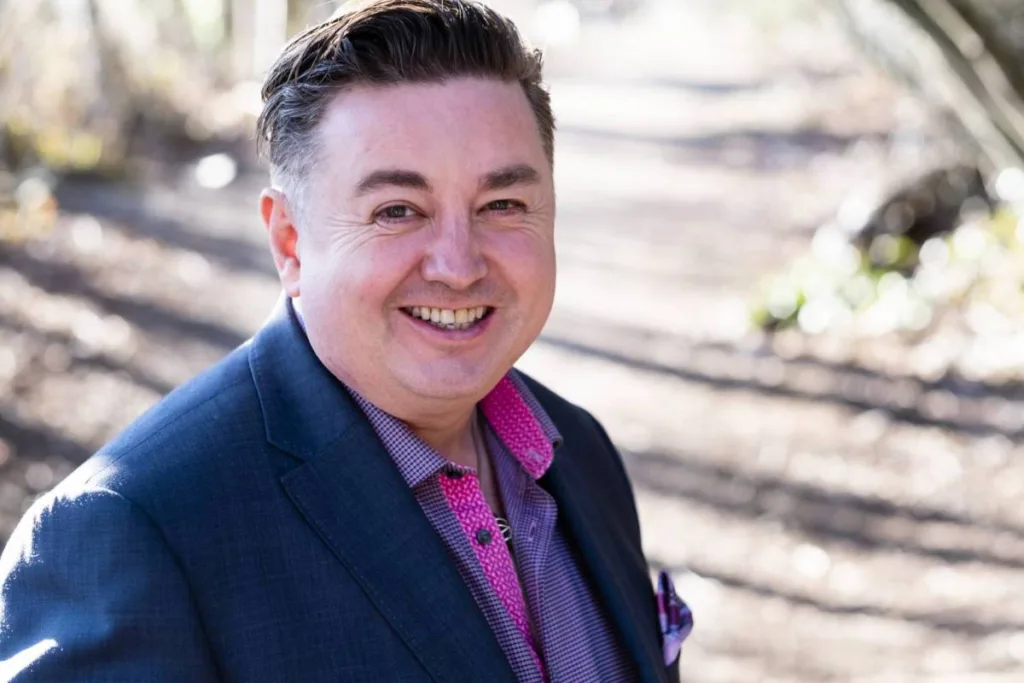
McAleer later founded the group Life After Hate and wrote a memoir, The Cure for Hate, in which he reflects, “I didn’t lose my humanity; I traded it for acceptance and approval until there was nothing left.” His work is built on a hard-won belief: that people become extremists not because they are monsters, but because somebody offered them a story in which violence was the price of finally belonging.
That story, say researchers, is now sold through a highly professionalised ecosystem. A joint “Five Eyes” assessment on youth extremism released earlier this year warned that extremists use mainstream platforms, gaming chats, private Discord servers, encrypted messaging, Instagram, and TikTok to make violent ideas “more accessible to children and young people globally.”
In Bondi, those threads appear to have run straight through a family home.
Neighbours describe the Akrams as “quiet” and “kept to themselves.” Local reporting suggests they lied to relatives on the afternoon of the attack, claiming they were going fishing or traveling, before driving instead to Bondi with rifles and improvised bombs. Islamic State flags were reportedly found in their car. For those who work with former extremists, the pattern is painfully familiar: the slow creation of a secret life, group chats and videos no one else sees, a growing conviction that friends and family “wouldn’t understand.”
Clark McCauley, a social psychologist who has spent decades studying terrorism, puts it bluntly: “Terrorists are neither crazy nor suicidal. The vast majority… are perfectly normal, psychologically speaking.” In his view, ordinary citizens can be drawn into violence when they feel that “a cherished group is threatened,” and when small, tight-knit groups reward them for crossing lines they would never cross alone.
Seen from this angle, the Bondi attack is less a spontaneous eruption of religious hatred than the visible end of a long chain of influence. At one end are recruiters and propagandists who package grievances into memes and sermons. In the middle are people like Sajid and Naveed, who consume that content in bedrooms and car parks and bring it to the dinner table. At the other end are the families celebrating a holiday at the beach, who never see the pipeline until the bullets arrive.
Narrative 2 — The Crackdown: Guns, Intelligence and a Community on Edge
In this narrative, we stay with those whose first responsibility is protection: political leaders, Jewish community figures, and security officials who see Bondi as a catastrophic failure of existing systems, and as a call to act harder and faster.
From the moment the first news alerts hit phones on Sunday night, the event had a name: “Bondi Beach terror attack.” There was no hesitation in the language from the Prime Minister’s office. “This was an act of evil antisemitism,” Anthony Albanese said, calling it “one of the darkest days in our city’s history.”
For many Jewish Australians, there was also no surprise. Community leaders had been warning for months about rising antisemitism since the 7 October Hamas attacks and the war in Gaza. They pointed to abusive placards at rallies, vandalised synagogues, and an explosion of online hate.
“We are horrified, but sadly not shocked,” one Jewish federation leader wrote after the attack. In Ottawa, thousands of kilometres away, the Jewish Federation vowed to continue Hanukkah events despite increased security, saying “hate will not stop our celebrations.”
Inside Australia, the immediate questions were operational. How did a man with six legally registered firearms, and a son once on ASIO’s radar for suspected ISIS links, get close enough to a major Jewish event to kill so many?
Senior ministers called an emergency national cabinet meeting. Within 24 hours, all states and territories had agreed “in principle” to toughen gun laws again — an echo of the sweeping reforms that followed the Port Arthur massacre in 1996. Proposals on the table include limiting the number of guns an individual may own, narrowing the categories of acceptable firearms, and making Australian citizenship a condition for a firearms licence.
For security agencies, the questions cut even closer to the bone. ABC News reported that Naveed had been the subject of a six-month ASIO investigation in 2019 but was assessed as no longer a threat. “We have to understand what was known, what was done, and whether our settings are fit for this new environment,” one senior official told reporters off the record.
Within Jewish communities, the sense of vulnerability is immediate and visceral. Parents are asking whether to send children to Jewish schools. Synagogues are reviewing security protocols, often with the same police forces that were on the sand at Bondi. A leader in Sydney’s eastern suburbs told one newspaper that “we have lived with a low-level hum of threat for years, but this is different. This was a mass murder at a public Jewish celebration.”
Viewed from here, Bondi is less a puzzle about the human psyche than a test of political will. If one father and one son, operating in a country with some of the world’s toughest gun laws, can still assemble an arsenal and slaughter a crowd of families, what does that say about the resilience of the systems built after Port Arthur?
Wolves, Shepherds and the Temptation to Hate Back
The Silent Story steps out of both previous narratives. It looks at the human and systemic layer beneath the headlines: how grief can harden into blame, and how the same machinery that radicalised a father and son can feed off our reactions to them.
In the Gospel of Matthew, there is a line that has been repeated so often it risks sounding like background noise: “Beware of false prophets, who come to you in sheep’s clothing but inwardly are ravenous wolves.”
It is easy, after an attack like Bondi, to assign that verse to one group: to imagine “wolves” as bearded men with rifles on a bridge, or as preachers preaching martyrdom in some distant city. But the longer you look at the architecture of modern hate, the more the warning seems to be about something bigger: about those who learn to weaponise our sense of being victims, whoever we are.
The Jewish families on Bondi’s sand have good reasons to feel afraid. So do Muslim communities who know they will be stared at more harshly on trains this week, and Palestinian families who watch events in Gaza and feel that no one sees them as fully human either. Around each group are voices saying: your fear is proof that they are the problem.
Psychologists like Clark McCauley have spent years studying how that “they” is constructed. He notes that terrorists hope for exactly the kind of response that turns individual guilt into group stigma. “A violent response to terrorism that is not well aimed,” he has written, “is a success for the terrorists,” because it helps them be seen as the true representatives of a much larger community.
In that sense, the same industry of hate that recruited Sajid and Naveed also stands ready to recruit anyone who finds themselves saying, in the quiet of their own mind, “We will never be safe while those people are among us.” It offers the seductive relief of certainty and the cheap satisfaction of blaming a whole group rather than facing the complexity of individuals.
Tony McAleer’s journey out of white supremacy is one story about what it takes to resist that pull. He says he began to change when people he expected to hate him — including Jews — met him with a kind of compassion he did not think he deserved. “I’ve come to call this radical compassion, the cure for hate,” he told one interviewer. “Compassion is the antidote for shame.”
That phrase, “radical compassion,” can sound naïve in the shadow of fresh graves. It is not a policy by itself, and it does not replace security. What it does is insist on a distinction: that we can oppose an ideology absolutely, and protect ourselves fiercely, without accepting the story that the people tempted by that ideology are less than human forever.
In practical terms, the Silent Story suggests three uncomfortable, parallel tasks:
- Go after the engineers of hate — whether they fly a black flag, a swastika, or a party logo — with the same seriousness we reserve for arms dealers and organised crime. That means tracing funding, disrupting online ecosystems, and limiting the reach of those who profit from turning resentment into violence, as Canada has begun to do by listing groups like 764.
- Support the communities under threat — Jewish, Muslim, and others — so they are not left to fend for themselves or to build parallel, mutually suspicious security bubbles. That includes listening when they say “we warned you,” and resourcing their protection in ways that do not stigmatise them further.
- Invest in exits and inoculation — mentors, therapists, teachers, and former extremists who can recognise early signs, offer other forms of belonging and challenge black-and-white thinking before it hardens. As Kruglanski and others argue, if the quest for significance is what drives many into extremism, then societies need better ways to offer significance that do not end with a rifle on a bridge.
None of this changes what happened on Bondi Beach. It does not erase the image of families sprinting barefoot over hot pavement, or of a man from Syria risking his life to wrestle a rifle away from someone else’s father. It does not blunt the pain of a community that will now see that bridge in every Hanukkah candlelight for years to come.
What it might change is the story we tell ourselves about what happens next. We can treat Bondi strictly as a clash of religions, and let the wolves sell that story until it becomes a self-fulfilling prophecy. Or we can treat it as proof that the business of hate is getting better at finding people like Sajid and Naveed and ask, calmly and urgently, what it would take to put that business out of business.
Key Takeaways
- A father and son, Sajid and Naveed Akram, used legally owned firearms to attack a Hanukkah event at Bondi Beach, killing at least fifteen people and wounding dozens.
- Naveed had previously been examined by ASIO over suspected Islamic State links but was deemed not an imminent threat, raising questions about risk assessment.
- Experts emphasise that extremists are often driven by a “quest for significance” and a search for belonging, which sophisticated networks of hate exploit across ideologies.
- Australian leaders are promising tighter gun laws, while Jewish communities worldwide are increasing security but insisting that celebrations continue.
- The Silent Story argues that the real battle is against the systems and influencers who engineer hate, not against entire religions or communities.
Questions This Article Answers
- What happened at the Bondi Beach Hanukkah event?
Two gunmen, a father and son, opened fire on a Jewish community gathering at Bondi Beach, killing at least fifteen people and injuring more than forty. - Who were the attackers?
The alleged attackers were Sajid Akram, 50, and his son Naveed, 24. Sajid held a firearms licence; Naveed had previously been investigated by ASIO. - How do experts explain why people join violent movements?
Researchers say most terrorists are driven by a quest for significance and belonging. Sophisticated networks exploit this need, turning it into a business model of radicalisation. - How are governments responding?
Australian leaders have promised to tighten gun laws and review security protocols, particularly regarding how intelligence agencies assess risk. - What is the connection to online extremism?
The attack highlights how individuals are radicalised through online ecosystems. Governments like Canada are beginning to list these online networks (such as 764) as terrorist entities to disrupt this “industry of hate.”
Process & AI-Use Disclosure
This article was reported and structured by a human journalist using publicly available sources, including on-the-record statements, government documents, and expert research. AI tools were used to help organise background material and check timelines, under the direct supervision and final edit of the author. For details on how 3 Narratives News uses AI assistance, please see our pages at /how-we-use-ai/.
Related 3N coverage: For our analysis of Canada’s decision to list the online network 764 as a terrorist entity, see “Canada Lists 764 Network as a Terrorist Entity: What It Means for Online Extremism”.