From Julius Caesar’s calendar to the darkest dictators of our age, this is a walk through history with one quiet question in mind.
December 1, 2025
The Dictator Who Lives Inside Your Phone
You wake up, reach for your phone, and tap the little square that tells you what day it is. A box appears: Monday, December 1, 2025. Meetings, birthdays, bills, all lined up in neat rows.
You might think this is just software. Sure, it is. But the shape of that time, the length of the year, the rhythm of months, comes from a man who took absolute power in Rome more than two thousand years ago.
His name was Julius Caesar. He used war, charm, and politics to take control of a tired republic. He also brought home an idea from Egypt that would outlive every speech he ever gave. He pushed through a new calendar that matched the sun much better than the messy old Roman one, and he gave his own name to one of the months. July.
Every time you glance at your calendar, you are still living inside one decision made by a ruler that many of his own people called a tyrant.
So here is the quiet question for this journey: When someone takes near total power, does that make them evil by nature, or do we have to look at what they do with it?
What Do “Tyrant” and “Dictator” Really Mean?
In the ancient Greek world, a “tyrant” was a person who took power outside the normal rules. At first, that word did not always mean cruel. Over time, as harsh rulers came and went, the word turned darker, until in most languages it simply meant a ruler who did not answer to any law and often used fear to stay in charge.
“Dictator” began as a Roman job title. When Rome faced a grave danger, the Senate could appoint one man to act fast. He had much greater power than other leaders, but only for a short time. Then the job was supposed to end, and the republic would return to normal.
Today, the words “tyrant” and “dictator” are almost always insults. A dictator is seen as a leader who collects power in his own hands and stays there by pushing aside courts, votes, and critics.
In news and daily talk, we use these words as if they are moral verdicts. Once someone is called a dictator, the case feels closed.
This article does something different. It does not try to defend or attack any living leader. Instead, it takes a slow walk through a few lives in history where one person held very strong power. Some used that power to build. Some used it to ruin. In the end, you can decide what the word “tyrant” means for you.
Narrative One: The Tyrants Who Tried to Build
The first story is told from the side that believes strong rule can sometimes help when a country is stuck. In this view, there are moments when many voices pull in different directions, and one person steps in, breaks the rules, and forces change that, in time, many people come to value.
1. Julius Caesar: The Man Who Fixed Time
When Caesar rose in Rome, the old calendar was a mess. Priests and politicians could add or drop days and months for their own plans. Farmers did not know when the year truly began. The seasons drifted. The sky and the law had fallen out of step.
After time in Egypt, where scholars had long watched the sun and the Nile, Caesar brought back a simple idea: make the year follow the sun, with one leap day every four years. With help from Egyptian experts, he forced through this reform in forty six before Christ. The result became known as the Julian calendar. It shaped the timing of work, faith, and trade in Europe for many centuries.
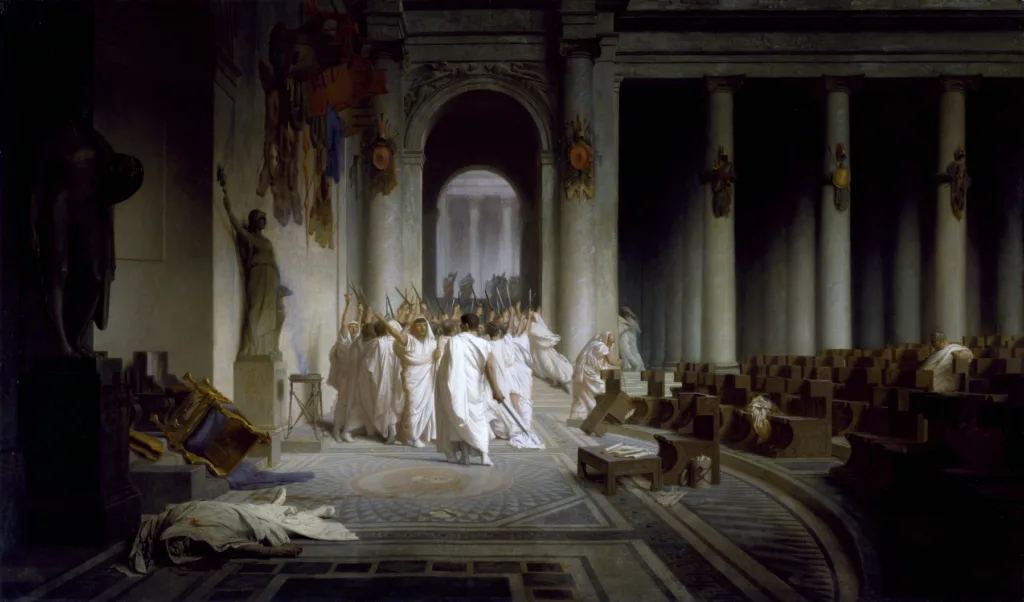
Of course, Caesar did much more than fix the year. He defeated rivals, took the title of dictator, and gathered offices that had once been shared. He pardoned many old enemies, but his grip on Rome scared the Senate. They stabbed him to death in a meeting room, claiming they were saving the republic.
Did Caesar save Rome from chaos, or did he destroy it? It depends which Roman you ask. But your calendar still carries his mark.
2. Mustafa Kemal Atatürk: The Father of a New Turkey
Our next stop is a small, wounded country after a lost war. The Ottoman Empire had collapsed. Foreign powers carved up old lands. In the middle of this wreckage, a former officer named Mustafa Kemal led a fight to build a new state: Turkey.
Atatürk and his party ran Turkey as a one-party system for many years. He banned old titles, closed some religious courts, and pushed religious power out of government. He changed the written script from Arabic letters to a Latin-based alphabet that many found easier to learn. He opened more schools, backed science, and pushed hard for women to gain more rights and to take part in public life.
To his supporters, he was the founder who dragged a broken society into the modern world. To his critics, he was a leader who pushed faith aside and allowed little room for open politics.
But everyone in Turkey still walks through streets lined with his statues and portraits. His face is as present there as Caesar’s calendar is in your phone.
3. Lee Kuan Yew: The Strict Gardener of a Fragile Island
Our third stop is a humid port town in Southeast Asia in the middle of the twentieth century. Singapore had few natural resources and deep ethnic and class splits. The odds were not good.
Lee Kuan Yew led Singapore from a struggling trading post to one of the richest and least corrupt places on earth. Under his long rule, one party won most of the time. Streets were kept clean. Corruption was punished. Housing blocks rose. Children of all races went to school and were told that their future would depend on effort, not family name.
Free speech and protests were tightly controlled. Critics called his country a nanny state. Supporters said that strict rules were the price of safety and growth.
Today, foreign leaders still bring up his name when they ask whether a firm hand can speed up progress.
Seen from this side of the story, the pattern looks like this: sometimes a leader takes power, bends the rules, and many citizens later say, “Life got better. We had more food, more order, more chances for our children.”
At 3 Narratives News we have seen this tug of war in our reporting on other strong leaders, from South America to the Middle East. In our piece on one modern prince, “Mohammed bin Salman: The Progressive Prince or a Problem the West Cannot Ignore?”, we explored the same split view: reformer to some, danger to others.
Narrative Two: The Tyrants Who Brought Ruin
Now the bus of history turns down a darker road. The second story is told from the side that sees strong rule as a door that often opens into horror. Here, once one person stands above the law, there is little to stop the worst ideas.
1. Adolf Hitler: From Election to Total Rule
Adolf Hitler came to office in Germany at a time of fear and anger. The country had lost a war, owed huge debts, and many people felt humiliated. Hitler promised pride, order, and work. In 1933 he became chancellor. Soon he used emergency laws, a fire in the parliament building, and party pressure to push aside rivals and turn a troubled democracy into a one party state.
Under his rule, Jews and other groups lost rights, then homes, then lives. Camps spread across Europe. War followed, and with it, tens of millions of deaths, deaths towards his enemies, allies and children.
Hitler did not only break rules. He broke bodies and families, and tried to exterminate all jews on a scale that still shapes law and memory today.
2. Joseph Stalin: Rule by Fear
In the Soviet Union, Joseph Stalin also held near total power. He drove rapid industrial changes and pushed farms into large state run units. He spoke of building a worker’s state. But he also ordered purges that swept through the party, the army, and the streets. Courts and secret police sent millions to prison camps in a wide Arctic and Siberian system that came to be known as the gulag.
In Ukraine, his policies and grain seizures helped bring about a famine that killed millions. In many homes across the Soviet lands, a knock at night could mean a father or son would never come back.
Some people still praise Stalin for turning a rural empire into an industrial power. For the families who lost loved ones, the cost of that power will never be abstract.
3. Pol Pot: Year Zero in Cambodia
Our last stop on this grim road is Cambodia in the nineteen seventies. A group called the Khmer Rouge, led by a man named Pol Pot, took control after a civil war. They wanted to build a simple farming society from scratch.
Cities were emptied. Money, schools, and many forms of faith were banned. People who wore glasses, spoke foreign languages, or had any sign of education were seen as threats. Many were taken away to fields and never returned.
By the time Vietnamese forces entered the country and removed the Khmer Rouge, as much as a quarter of the population may have died from killing, hunger, and disease.
In the story of Pol Pot, we see what happens when one group with one idea answers to no law and no vote.
Seen from this side of the story, the pattern looks different: once a leader is above the rules, there is almost nothing to stop cruelty from growing step by step, then all at once.
At 3 Narratives News we touch the edge of this fear when we write about modern strong leaders and war. In our recent piece on Ukraine and energy corruption, “Ukraine’s War Within: Ukrainian Journalist Heroes and the ‘Midas’ Scandal” , we saw how hidden power over vital systems can damage a country from the inside even while it fights an outside enemy.
The Silent Story: The Elephant We Will Not Name
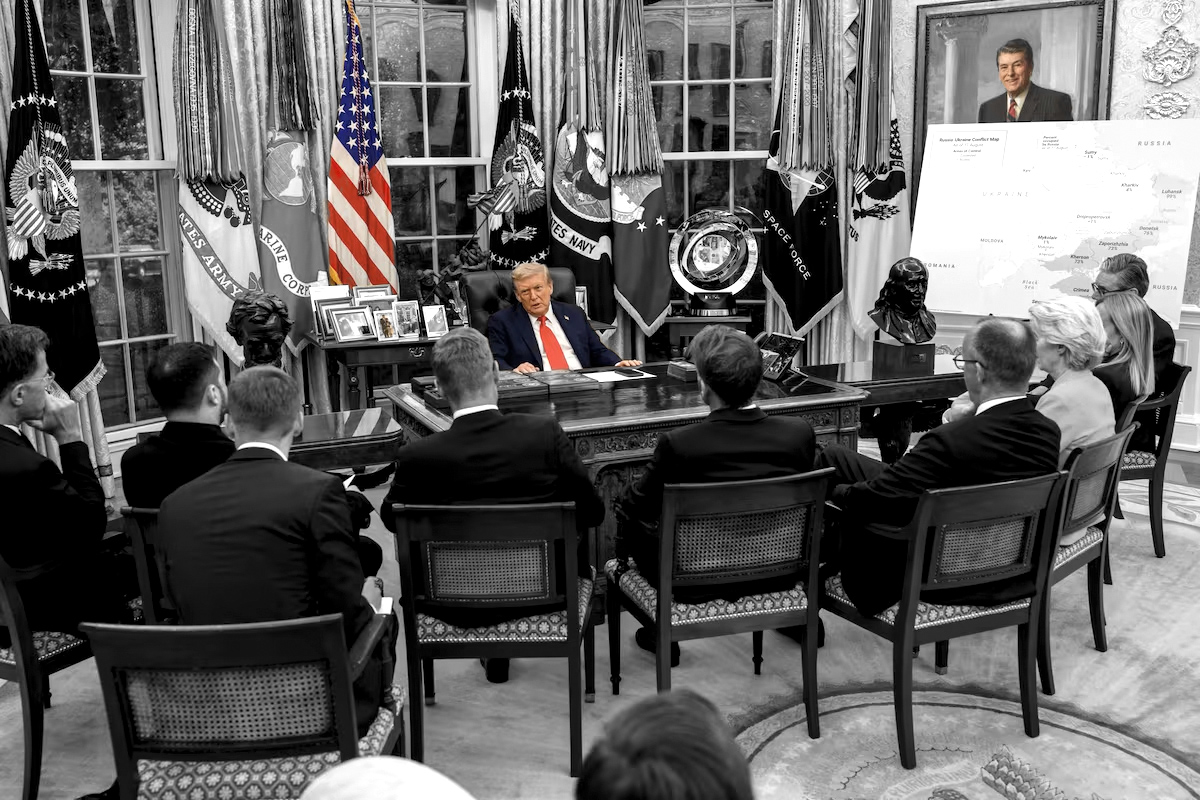
There is one more figure in this story. We will not say his name. We do not need to. As of this date, December 1, 2025, he fills television screens, phone alerts, and world headlines more than any other single person in politics. He is the elected leader of a very large country. He has already held the job once, lost it, and then taken it again.
To some, he is a hero who speaks for people who feel ignored. They see him as the only one willing to fight a distant and smug class of officials, judges, and experts. They used to whisper that their country needed a strong leader. Now they feel they have one.
To others, he is a danger to the very idea of shared rules. They see him press courts, use emergency orders, weaken watchdogs, and turn state tools against critics. They look at the history books, see the line from Caesar’s order to Nero’s madness, and fear that the slide from “strong leader” to “tyrant” is a cliff, not a gentle hill.
He is the elephant in this room. You do not need his name to picture him. You already carry your own image of him, shaped by the news you follow, the friends you trust, and the fears you hold.
The deeper, silent story is not only about that one man. It is about us.
We reach for strong leaders when we feel that normal politics no longer works. When prices rise, when wars drag on, when our children cannot afford homes, when news seems fake from every side, the idea of one person who says “Leave it to me” can feel like relief.
History shows that some of these leaders use their extra power to build new rules that many people later call progress. Others use it to crush those who stand in the way, and leave behind graves and scars.
The tricky thing is this: people living inside the story almost never know which kind of leader they have until much later.
Romans under Caesar saw roads, games, and food. Germans under Hitler saw jobs, parades, and flags before they saw camps and ruins. Cambodians under Pol Pot heard promises of pure equality before they saw empty cities and killing fields. People of young Turkey or Singapore saw strict new rules, but also schools, lights, and rising incomes.
We, living now, do not yet know how our unnamed leader’s story will end or how future books will describe him. Future readers may see him as a leader who broke stale habits and forced the world to face hard truths. Or they may see him as a warning about how easy it is for a rich, connected democracy to weaken its own guardrails.
That verdict will not be written by this article or by tonight’s talk shows. It will be written many years from now, by people who have the distance we now have when we look back at Caesar, Atatürk, Lee, Hitler, Stalin, and Pol Pot.
For today, the only honest step is to notice how close these stories sit together. Helpful tyrant. Ruinous tyrant. And the leader we argue about each day, whose file is still open.
Our promise at 3 Narratives News is simple: Two sides. One story. You make the third.
But remember: history is not just writing this story. It is waiting to see which version of it you will accept.
Key Takeaways
- Words like “tyrant” and “dictator” once had neutral or even legal meanings but now are used mostly as moral labels.
- Julius Caesar, Atatürk, and Lee Kuan Yew all used strong power to push through reforms that many citizens still see as helpful.
- Hitler, Stalin, and Pol Pot show how the same kind of power can lead to mass death when no law or vote can stop bad choices.
- Our unnamed modern leader sits between these stories, praised by some as a savior and feared by others as a threat to shared rules.
- The hardest truth is that people living inside such times rarely know how history will judge their leaders.
Questions This Article Answers
- What did “tyrant” and “dictator” mean in their original Greek and Roman settings?
- How did Julius Caesar’s calendar reform still shape the way we live today?
- In what ways did Atatürk and Lee Kuan Yew use strong rule to change their countries?
- How did Hitler, Stalin, and Pol Pot turn extreme power into wide scale harm?
- Why is it so hard to know, in real time, whether a strong leader will be seen as famous or infamous by history?