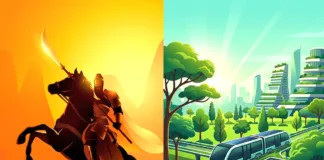
“When the heart of Iran is under fire, we must either stand together or fall divided,” Reza Pahlavi proclaimed from his Washington home while in exile, today, June 20, 2025. “My father once said that Iran’s destiny belongs to her people, not to foreign ideologies or mullahs in basements.”
I’ve asked ChatGPT to do an in-depth analysis of two possible futures, considering all of the latest news as it unfolds based on the modern history of Iran.
Historical Background
“We will fight to the last drop of blood for our nation,” Supreme Leader Ayatollah Ali Khamenei intoned on state television as the first Israeli bombs shattered Tehran’s dawn silence. “They can bomb our buildings, but they cannot bomb our spirit.”
On the streets below, grief and defiance mingled in candlelit vigils. In a rare concession, Foreign Minister Hossein Amir-Abdollahian admitted, “The losses are severe, but Iran emerges stronger when tested.”
Across the ocean, former President Donald Trump tweeted his approval: “Israel is doing what must be done. Prime Minister Netanyahu has my full backing. Iran will soon learn the true meaning of unconditional.” Meanwhile, in Jerusalem, Benjamin Netanyahu spoke before the Knesset: “We strike to secure our children’s future. There will be no half-measures. Iran’s nuclear ambitions end now.”
Rewinding to the mid-1970s, Shah Mohammad Reza Pahlavi had cast himself as the architect of a modern Iran. “We are forging a bridge from our Persian past into a global future,” he declared at the White Revolution’s launch, promising land reform, women’s rights, and secular schools. Yet by late 1978, even his loyal generals murmured: “The monarchy no longer commands the pulse of the streets.”
Against this layered history, two stark visions of Iran’s tomorrow have emerged.
Narrative One: The Pahlavi-Led Transition
June 2025. As Israeli warplanes returned, decapitating key Revolutionary Guard command posts, ordinary Iranians feel the current order fracturing. In Tehran’s rubble-strewn squares, protests swelled. Regime checkpoints faltered. A clandestine Transition Council, formed by defecting officers and civil-society leaders, broadcast a summons: “We call upon Reza Pahlavi to return—not as a king, but as a servant of Iran’s rebirth.”
Possible Future. From the tarmac in Tehran, Reza Pahlavi stepped onto his homeland for the first time in 46 years. Tears glistened as he greeted cheering crowds. In his first address on Iranian soil, he intoned: “I return not in triumph but in solidarity. Let us heal the scars of war and tyranny together.”
Politics of Inclusion. Drawing on his decades in the West, Pahlavi swiftly assembled an interim cabinet comprising technocrats, human rights lawyers, ethnic minority representatives, and even moderate clerics who had been expelled from the clerical establishment. His top priority: organizing a nationwide referendum on Iran’s system of government. “Whether republic or constitutional monarchy,” he affirms, “the choice belongs to you.”
Diaspora and Diplomatic Backing. Fund managers in London wire cash for hospitals; Iranian-American doctors airlift medical supplies. In Washington, Pahlavi will meet President Trump in the Oval Office. Trump declares, “I’ve known the Pahlavis a long time. He’s the right man for Iran’s new beginning.” European capitals follow suit, recognizing the transitional government. In Tel Aviv, Netanyahu sent a personal envoy: “Our common enemy is gone. Let us forge peace together,” the envoy reports.
Early Tests. Within days, electricity flickers back in Tehran; bakeries reopened. But Pahlavi cautions against overconfidence: “Reconstruction must not privilege one faction. Like Cyrus the Great, we must respect all peoples of Iran.”
Yet cracks appear. Hard-line remnants of the IRGC retreated to the mountains, launching sporadic hits. Secular republicans bristled at any hint of royal prerogative; leftists demanded social-welfare guarantees. Pahlavi countered: “Disagreement is our strength, not our weakness—so long as we respect democratic rules.”.
This is a future dream of possibilities for the millions of Iranians living abroad.
Narrative Two: Clerical Regime Resilience
As one path opened, another grim scenario unfolded. From an underground bunker, Khamenei’s voice transmitted on clandestine channels: “This war proves the infidels’ designs. Only our faith unites us.”
Military Cohesion. Despite heavy losses — including General Hossein Salami’s death in an airstrike — the IRGC’s deep bench held fast. A younger cadre assumes command, launching missile barrages at U.S. bases in the Gulf. Basij militias sealed neighbourhoods under draconian curfews. “We know no fear,” announces IRGC deputy commander Brig. Gen. Mohammad Reza Naqdi.
Diplomatic Maneuvers. Russia and China quietly vetoed harsher UN sanctions. French President Macron brokers a shaky ceasefire: Israel would halt strikes in exchange for Iran freezing its uranium enrichment. Iran’s negotiators hail the accord as “a victory for resistance,” while hard-liners use it to justify purging any official caught speaking with the Pahlavi camp.
Domestication of Dissent. Revolutionary courts hand down death sentences to “traitors.” State TV glorified martyrs under the banner of “2025 War of Sacred Defence.” In Tehran’s basement cafes, whispers and conversations turned to despair: “We survived Saddam, the Shah, now this,” sighed a schoolteacher, under the watchful eye of lurking plain-clothes agents.
Economic Collapse and Isolation. Sanctions remained in place despite the ceasefire. Oil exports stalled; the rial collapsed. Yet the IRGC’s vast commercial empire — from petrochemicals to construction — insulated its ranks. As long as the Guard controlled key ports and pipelines, the regime endured. Khamenei’s final broadcast before Ramadan declared: “We have been tested; we remain unbroken.”
On the Brink
Two futures stand in stark relief. In one, Iran embraces a new social contract under Reza Pahlavi’s cautious stewardship, bolstered by international goodwill yet challenged by age-old fractures. In the other, the Islamic Republic fortifies itself in a siege mentality, ruling by fear and fatigue, while its economy and legitimacy decay.
Every echo of “Death to Israel” on one side, and every rallying cry of “Let the people decide” on the other, underscores that Iran’s destiny remains undecided. As bombs continue to fall, and as Reza Pahlavi’s words ring out in exile and at home, the nation waits for unity, for rupture, or the next chapter in its long struggle between tyranny and freedom.
“History writes itself in moments of crisis,” Reza Pahlavi reminded thousands in Tehran, his voice catching on the wind. “Let us ensure that this chapter belongs to the brave, the hopeful, and the free.”