
In his return to power, Donald J. Trump has reshaped America’s direction with bold executive moves and polarizing policies. Whether he’s restoring greatness or unraveling democracy depends on which side of the divide you’re standing on.
Narrative 1: The Supporters — “Promises Made, Promises Delivered”
1. Immigration Control and National Security
Trump’s administration has doubled down on immigration enforcement. ICE now operates with expanded powers, fast-tracking deportations and relocating certain detainees to offshore facilities, including Guantanamo Bay and third-party nations. Supporters argue this restores law and order while prioritizing national security and fiscal responsibility.
2. “Liberate America”: The Trade Reset
With most global economies imposing tariffs, Trump argues it’s time the U.S. fights back. Through his Liberate America initiative, he has placed aggressive tariffs on foreign goods to prioritize American manufacturing, create domestic jobs, and address long-standing trade imbalances.
3. Fiscal Accountability: A Tech Billionaire’s Watchdog Role
DOGE, a task force led by Elon Musk and other business leaders, is conducting sweeping audits of government departments. The goal: reduce wasteful spending and rein in the national debt. It’s a capitalist approach to fiscal reform that resonates with free-market conservatives and those who believe Washington has grown bloated, inefficient, and unaccountable.
4. A Healthier America, the RFK Way
Vice President Robert F. Kennedy Jr. is pushing for a cultural shift in American wellness, targeting poor diet, sedentary lifestyles, and the influence of big pharma. His grassroots health campaign emphasizes prevention over prescription, aiming to reduce chronic illness across the nation.
Narrative 2: The Critics — “A Hundred Days of Havoc”
1. Broken Alliances and Global Fallout
Trump’s rhetoric and tariffs have soured U.S. relations with long-standing allies—especially Canada. His verbal jabs at Prime Minister Trudeau and threats of economic war have left North America divided. Critics argue he’s isolating the U.S. at a time when global cooperation is vital.
2. A Human Rights Crisis at Home
The swift and secretive deportations, along with the offshore holding of immigrants, have triggered outcries from civil rights groups. Detractors call it unconstitutional, immoral and authoritarian—bypassing the very due process that defines American democracy.
3. Environmental Setbacks
In just three months, Trump has dismantled key environmental protections and defunded climate agencies. Programs fighting famine and supporting sustainable development have been paused or scrapped. Environmentalists warn this could have irreversible global consequences.
4. Executive Overreach and Legal Chaos
With a barrage of executive orders and minimal congressional consultation, critics say Trump is acting more like a monarch than a president. A recent high-profile case involved a judge prosecuted for allowing due process to an undocumented immigrant—sparking national protests from the legal community.
5. Russia, Ukraine, and the Shadow of Allegiance
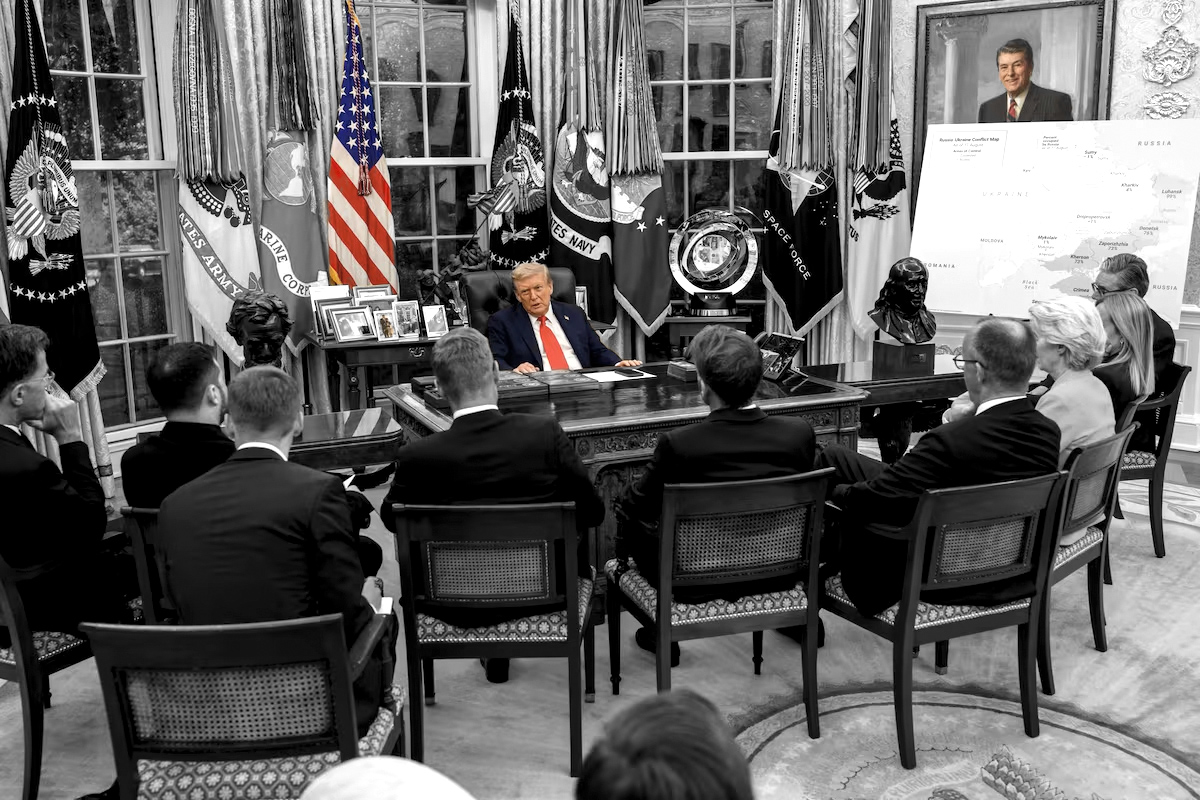
Trump’s cozy relationship with Russia and bizarre behavior toward Ukrainian President Volodymyr Zelensky—including mocking his English and questioning the war’s legitimacy—have added fuel to suspicions about his loyalties. Is this diplomacy, or deference?
Narrative 3 (Silent Story): A New Kind of Global Icon*
Love him or loathe him, Trump may now be the most talked-about person in human history.* His name appears across more global media outlets, social platforms and news feeds than any figure before—a byproduct of digital saturation and a planet with 8 billion voices.
*Based on global media analytics, Trump consistently tops keyword frequency across traditional and social media platforms since 2016, maintaining dominance in political discourse worldwide. (Pew Research, arXiv study, Twitter/X trend logs)
In the silent story behind both narratives, Trump isn’t just a president; he’s an algorithm. Every speech, every insult, every off-the-cuff remark is instantly turned into content—retweeted, clipped, stitched, subtitled and weaponized. Policy, personality and profit all blur together.
Supporters see this as proof he’s broken through the gatekeepers and speaks directly to “the people.” Critics see it as a feedback loop in which outrage is both the product and the business model. Either way, Trump’s second term exists not just in Washington’s corridors of power, but in the timelines and recommendation feeds that now shape how millions understand politics.
Update: A Hundred Days Later — What We’ve Learned
This article was first written looking at Trump’s second term through the lens of its first 100 days. Roughly another hundred days later, some of the boldest experiments—especially DOGE—look very different.
DOGE is officially scrapped. What was launched as a radical efficiency drive has now been quietly dismantled. The Department of Government Efficiency, led by Elon Musk and touted as a business-minded fix for Washington’s waste, has been shut down as a standalone project. Its most usable pieces have been folded into the existing bureaucracy; the rest has been written off as one of the administration’s most disruptive misfires.
Supporters still insist that DOGE proved how much fat could be cut from the system. But internal audits, court challenges and mass rehiring of dismissed civil servants suggest the net savings were far smaller—and the human and institutional costs far higher—than the early headlines claimed. What began as a tech billionaire’s crusade for fiscal accountability is now cited by critics as a warning about trying to “move fast and break things” inside a constitutional system.
From photo ops to feuds. The initial photo-friendly partnership between Trump and Musk—presented as a union of political power and engineering genius—has curdled. After a brief moment of mutual praise, the relationship slid into open hostility on X, with accusations about the Epstein files and public second-guessing of each other’s decisions. A project once sold as a model of public-private collaboration now looks more like another case study in how quickly alliances can fracture in the age of social media politics.
The rest of the agenda looks more fragile too. Immigration crackdowns are tied up in the courts, the Liberate America tariffs have triggered retaliation from allies, and RFK Jr.’s wellness crusade is struggling for airtime amid louder culture-war battles. If the first 100 days were defined by speed and spectacle, the next 100 have exposed the friction: institutions pushing back, unintended consequences surfacing, and even Trump’s allies debating how far is too far.
None of this erases the original narratives. For supporters, Trump is still the president finally doing what he promised. For critics, the last months only confirm their fears. But a hundred days later, one lesson stands out: it is far easier to announce a revolution in how government works than to sustain it once the headlines fade and the lawsuits arrive.
Which Narrative Will You Choose?
At 3 Narratives News, we don’t tell you what to think—we show you how the world sees it from different angles. The third narrative, as always, is yours to write.
References
- Immigration Enforcement and Policies
- Trade Policies and Economic Measures
- TIME Magazine: Inside Trump’s First 100 Days
- Media Coverage and Public Perception
- Environmental Policy Changes
- Global Media Attention




[…] This week marks 100 days of Trump’s presidency and opinion polls are scrutinizing his Trump 2.0 https://3narratives.com/100-days-of-trump/ […]
[…] just 100 days, President Trump’s second term has offered a new cast of characters—and perhaps no one has captured more attention, without […]
[…] themselves, concerned that Musk’s presence is undermining broader conservative goals. See 100 Days of […]
Your point of view caught my eye and was very interesting. Thanks. I have a question for you.
Can you be more specific about the content of your article? After reading it, I still have some doubts. Hope you can help me.
Your point of view caught my eye and was very interesting. Thanks. I have a question for you.
[…] First 100 Days of Presidency […]
Thanks for sharing. I read many of your blog posts, cool, your blog is very good.
[…] are two narratives, one about the tradition, one the transformation, and a third story of what this shift may […]